Key takeaways: Learn About Mangroves
- Mangroves are salt-tolerant trees that thrive in coastal intertidal zones where most plants cannot survive.
- Their specialized roots and salt-excreting adaptations help them live in salty, muddy, low-oxygen conditions.
- Mangrove forests support thousands of species and are critical for biodiversity.
- They store large amounts of carbon, making them a powerful blue carbon ecosystem.
- Mangroves reduce wave energy, help prevent erosion, and protect coastal communities from flooding and storm surges.
- These forests are closely tied to global fisheries and food security in coastal regions.
- Mangroves are found across tropical and subtropical coastlines worldwide, but they remain under threat from development, pollution, and sea level rise.
- Restoring mangroves is a high-impact nature-based solution for climate, wildlife, and communities.
What Are Mangroves, and Why Do They Matter?
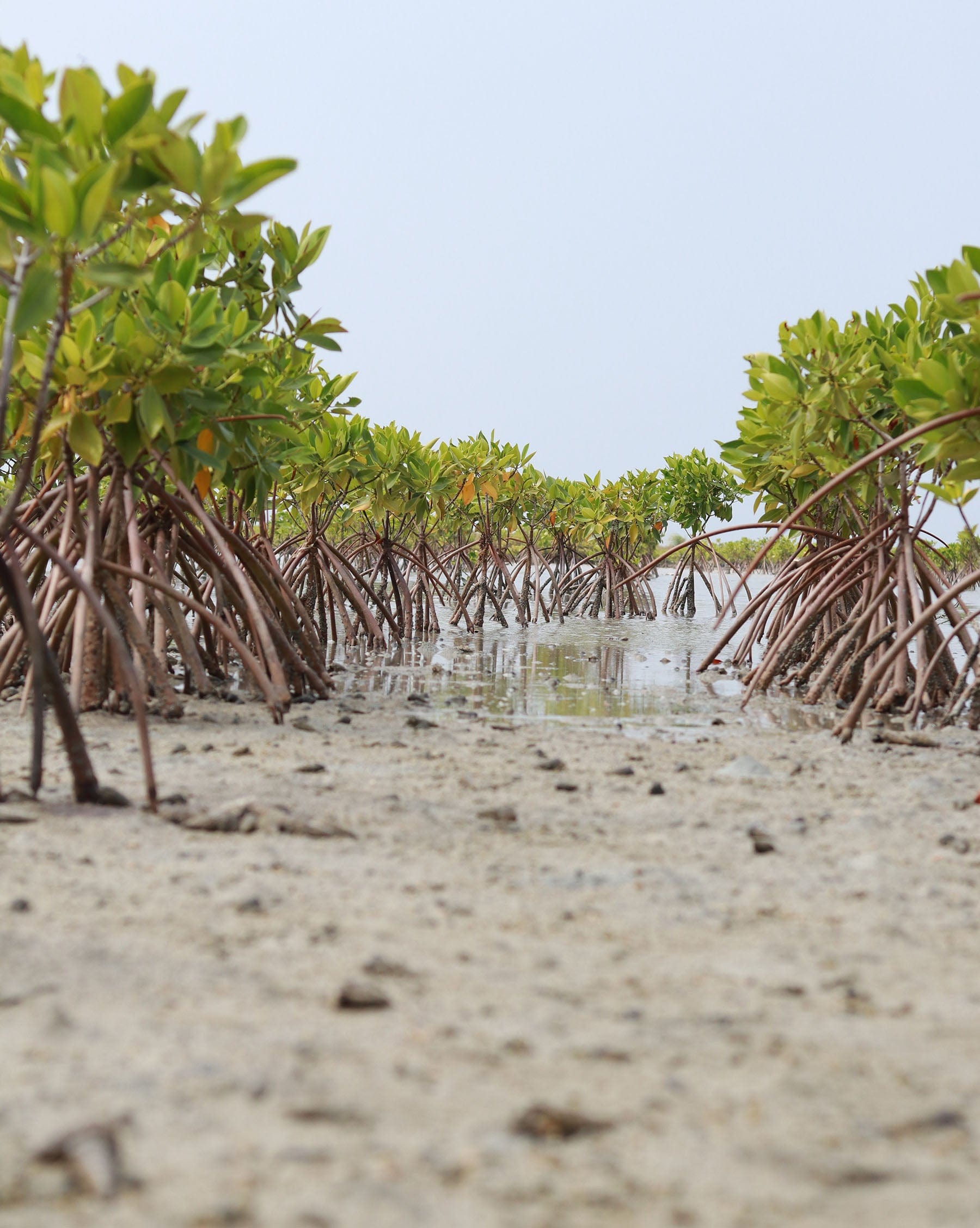
Mangroves are salt-tolerant trees (known as halophytes) that grow along coastlines in the intertidal zone: the space between high and low tide. At first glance, they look almost otherworldly: their twisted roots and branches jut upward from the sand and water like long, slender stilts, securing them against the battering of the sea and tide.
But those unusual attributes are exactly what make mangroves one of the most important ecosystems on Earth.
Unlike most trees, mangroves thrive in salty water, sand, and low-oxygen mud. Their specialized root systems stabilize them in soft sediment while also helping them “breathe” in oxygen-poor environments. Many species can filter up to 90% of salt from seawater as it enters their roots, while others excrete excess salt through pores in their leaves or store it in older bark and leaves that are eventually shed.
These adaptations don’t just help mangroves survive; they allow entire ecosystems to exist in an environment otherwise considered unfit for trees.

A Biodiversity Engine at the Water’s Edge
Mangrove forests are among the most biologically rich ecosystems on the planet. Their dense above- and below-water root systems create ideal conditions for life to flourish.
An estimated 1,500 species depend on mangroves, using them as nesting, nursery and feeding grounds. Juvenile fish grow among the roots before moving into open ocean ecosystems, while shellfish like oysters and mussels attach directly to submerged structures. Species like lemon sharks, mudskippers, and manatees rely on mangroves at key stages of their life cycles.
Above the waterline, mangroves support birds, mammals, and even large predators like tigers in some regions.
This biodiversity is increasingly at risk. According to a 2023 report by the UN Environment Programme, roughly 15% of mangrove-associated species face extinction, including:
- 50% of associated mammals
- 22% of fish
- 16% of plants
Mangrove habitats are critical links in global ecological networks.
Climate Powerhouses: The Role of Blue Carbon
Mangroves play an outsized role in climate regulation. Although they cover just 0.1% of the Earth’s surface, they can store up to 10 times more carbon per hectare than terrestrial forests according to the Food and Agriculture Organization of the United Nations (FAO).
This is largely due to “blue carbon”: carbon stored underwater in coastal and marine ecosystems. Mangroves store carbon in their leaves, and when those leaves drop and sink into the mud and silt, they decompose slowly and remain stored for centuries.
This makes mangrove protection and restoration one of the most effective nature-based climate solutions available today.
Natural Coastal Defense Systems
Mangroves are living infrastructure for coastal communities.
Their dense root systems reduce wave energy, stabilize shorelines, and limit erosion. Research shows that waves passing through just 100 meters of mangrove forest can lose up to two-thirds of their energy.
The impact of that natural barrier is not just environmental; it’s economic and social. The Global Mangrove Alliance estimates that mangroves prevent more than $65 billion in property damage annually and reduce flood risk for around 15 million people worldwide.
As climate change intensifies storms and sea level rise, this protective function becomes even more critical.
Supporting Global Food Systems
Mangroves are deeply tied to food security, particularly in coastal communities.
Roughly 80% of global fish catch is linked, either directly or indirectly, to mangrove ecosystems. Many commercially important species depend on mangroves as spawning grounds or nurseries before moving into deeper waters.
Beyond fish, mangroves also support shrimp, crabs, and other seafood staples, as well as local resources like fruit, honey, and even salt production.
Where Mangroves Grow, and What’s at Stake
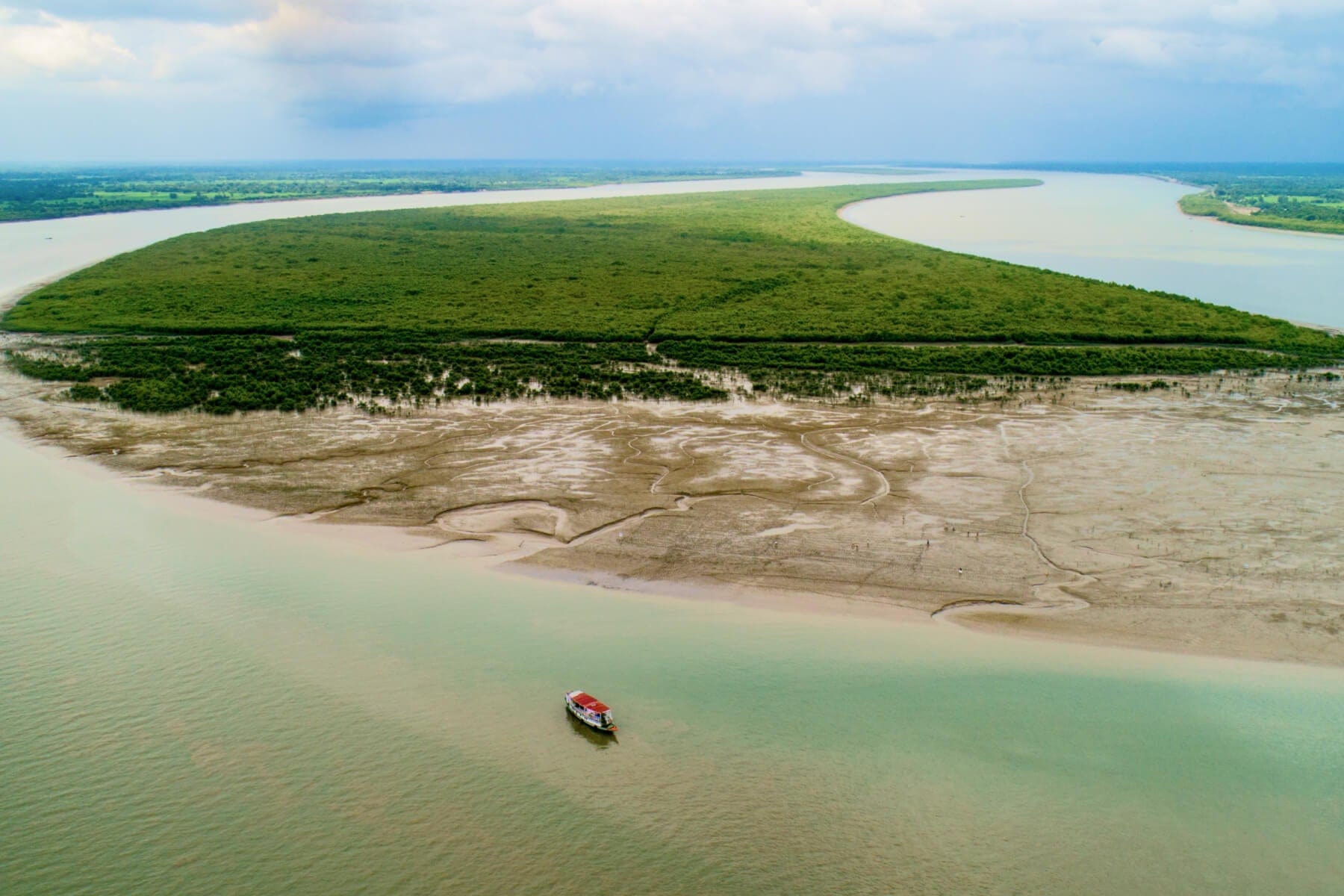
Mangroves are found in 123 tropical and subtropical countries, supporting an estimated 2.4 billion people who live within 100 kilometers of coastlines.
According to Global Mangrove Watch, there are approximately 147,539 square kilometers of mangrove forest worldwide:
- 51% in the Asia-Pacific
- 29% in the Americas
- 20% in Africa
Despite their importance, mangroves have historically been lost to coastal development, aquaculture (especially shrimp farming), and pollution. Between 1996 and 2020, about 3.4% of global mangrove cover disappeared.
There is some progress: in 2023 the UN Environment Programme reported that global mangrove loss rates had stabilized, with restoration efforts helping certain regions regain mangrove cover. But ongoing degradation, pollution, and biodiversity loss, combined with sea level rise and coastal development, continue to limit where mangroves can survive and expand.


