Our projects focus on restoring priority landscapes around the world—places where forests can make the biggest difference for nature and communities.
Click here to learn about our work
One of summer's more consistent unspoken rules is that people go outside. It’s not just the birdwatchers or those with strong opinions about trail shoes — but all of us, broadly speaking, including those who would describe themselves as indoor people under any other set of circumstances. The pull is biological before it is cultural. We need nature and benefit from time spent surrounded by it. The volatile organic compounds that trees release (phytoncides), have been shown to reduce blood pressure, lower cortisol, and increase the activity of natural killer cells in the immune system. A meta-analysis of 31 studies found the greatest reductions in salivary cortisol occurring at around 20 to 30 minutes of nature exposure. The Japanese practice of shinrin-yoku, or forest bathing, was built on exactly this pharmacology: the idea that being among trees has a measurable therapeutic effect that requires no particular effort — or even awareness — on the part of the person doing it. The body responds whether it's been told to or not.
National parks are where Americans have historically gone to answer that pull. The road trip to a forest, monument, or park is one of the more durable summer traditions in this country, practiced by people who reserve campsites six months out and people who decide on a Thursday night to take a last-minute weekend road trip to some place green. "America's national parks continue to be places where people come to experience our country's history, landscapes and shared heritage," Jessica Bowron, Comptroller exercising the delegated authority of the National Park Service Director, said in the agency's 2025 annual visitation report. The heritage she's describing includes some of the largest living organisms on the planet and trees that predate the country by a thousand years.
The National Park Service recorded more than 323 million recreation visits in 2025 — including over 13 million overnight stays — with 26 parks setting new all-time visitation records. The Blue Ridge Parkway alone drew 16.5 million visitors; Redwood National and State Parks saw a 91 percent surge in attendance, climbing from 633,000 visitors to more than 1.2 million in a single year. Interest in national parks and outdoor destinations is up 65 percent year-over-year this season, according to Expedia Group's Unpack '26 Summer report, with social conversation around domestic vacations doubling in the United States. "This summer, travel isn't slowing down — it's being reshaped," Melanie Fish, Vice President of Global Public Relations at Expedia Group, said in the report. "As major global events and rising costs influence decisions, travelers are either staying closer to home or seeking out destinations where they can get more for their money." Closer to home, this summer, often means the trees.
The parks on this list are heavily forested and are all within roughly six hours of at least one major metro area.

Nearest metros: Charlotte, NC (~2.5 hrs); Atlanta, GA (~4 hrs)
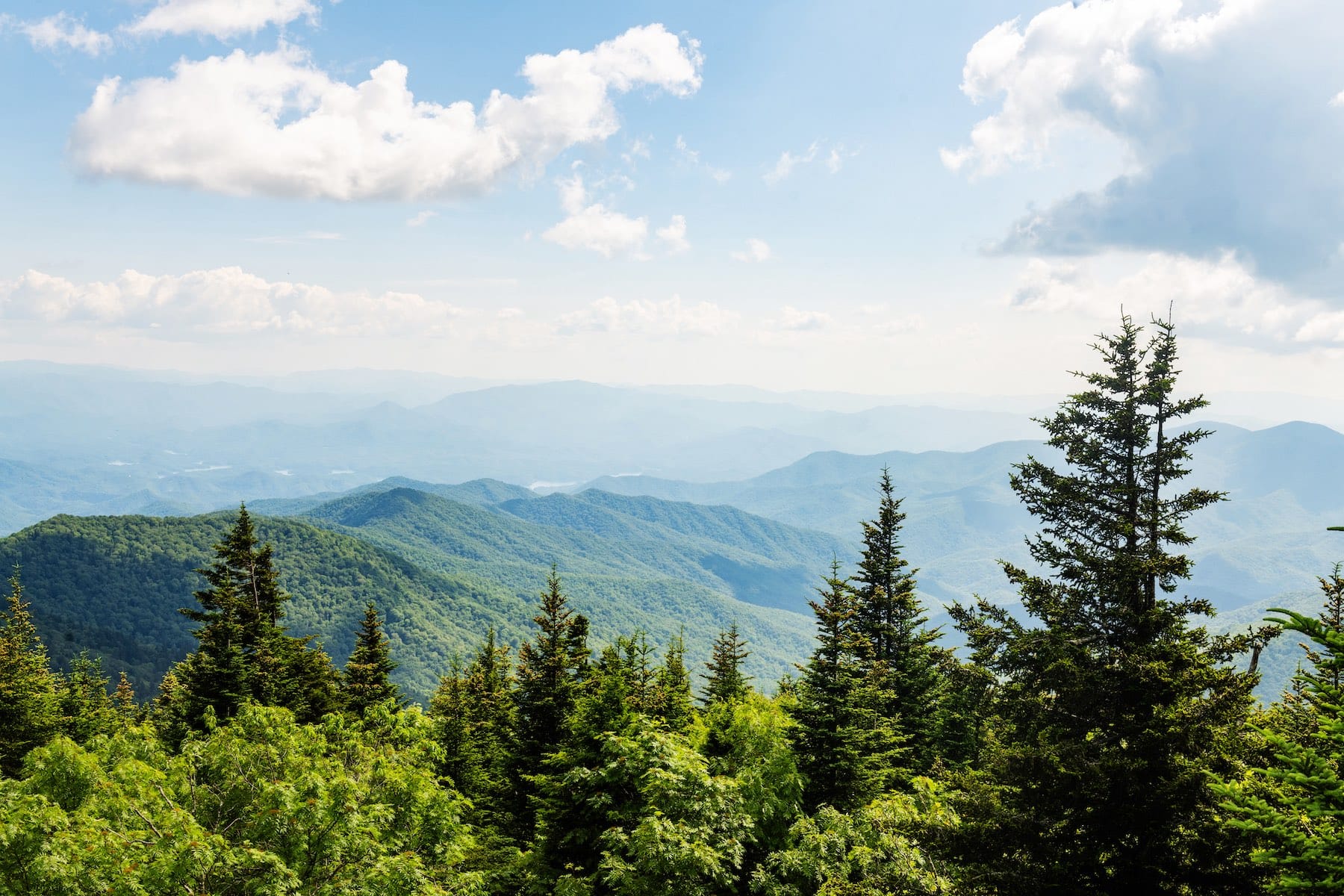
The most visited national park in the country drew 11.5 million visitors in 2025 — a figure that reflects both its extraordinary accessibility and the particular character of its forest. Great Smoky Mountains contains more than 100 native tree species, a density that qualifies it as one of the most biologically diverse temperate deciduous forests in the world, and is home to roughly 20,000 documented species overall, with scientists estimating thousands more yet to be formally identified. The name comes from a specific atmospheric phenomenon: the blue-gray haze that rises from the trees is produced by volatile organic compounds released by the vegetation, which react with sunlight and moisture in the atmosphere. Accommodations in Gatlinburg, Bryson City, and Cherokee fill months in advance for July and August; the shoulder weeks of early June or September are considerably easier to book.

Nearest metro: Washington, D.C. (~1.5 hrs)
Shenandoah stretches 105 miles along Virginia's Blue Ridge Mountains, with Skyline Drive — the only public road through the park — running its entire length at elevation. The forest here is dense oak, hickory, and tulip poplar, interrupted by granite outcrops and long valley views. More than 500 miles of trails branch from the Drive, including 101 miles of the Appalachian Trail, which runs the full length of the park. For the Washington, D.C. metro area, Shenandoah represents one of the more logistically straightforward transitions from dense urban environment to genuine old-growth canopy: the drive from the capital to the northern entrance at Front Royal is under 75 miles.

Nearest metros: Boston (~5 hrs); Portland, ME (~3 hrs)
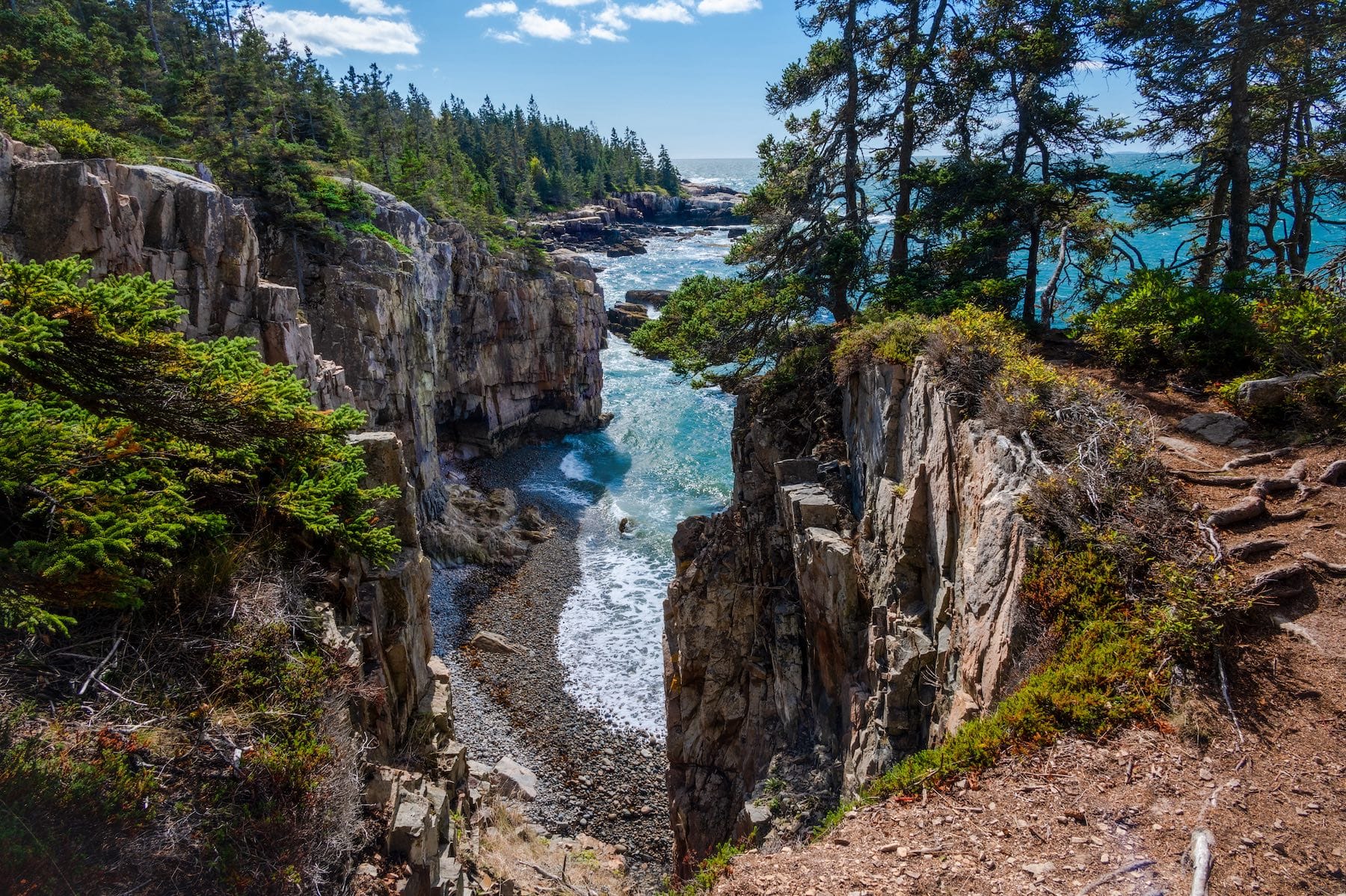
The only national park in New England, Acadia sits on Maine's Mount Desert Island and layers boreal forest — dense spruce and fir, stands of birch, cedar bogs — against a granite and Atlantic coastline. The forest feel here is intimate rather than vast; the scale is not overwhelming. Its 45 miles of carriage roads, designed by John D. Rockefeller Jr. and closed permanently to motor vehicles, remain among the most ecologically intact cycling and walking corridors in the national park system. Acadia drew 4.07 million visitors in 2025, placing it seventh among all national parks nationally. The Island Explorer shuttle and park entry both require advance reservations in July and August; the park's fee-free shoulder season in May and early June offers the same landscape with substantially fewer people on it.

Nearest metros: Los Angeles (~2.5 hrs); Palm Springs (~45 min)
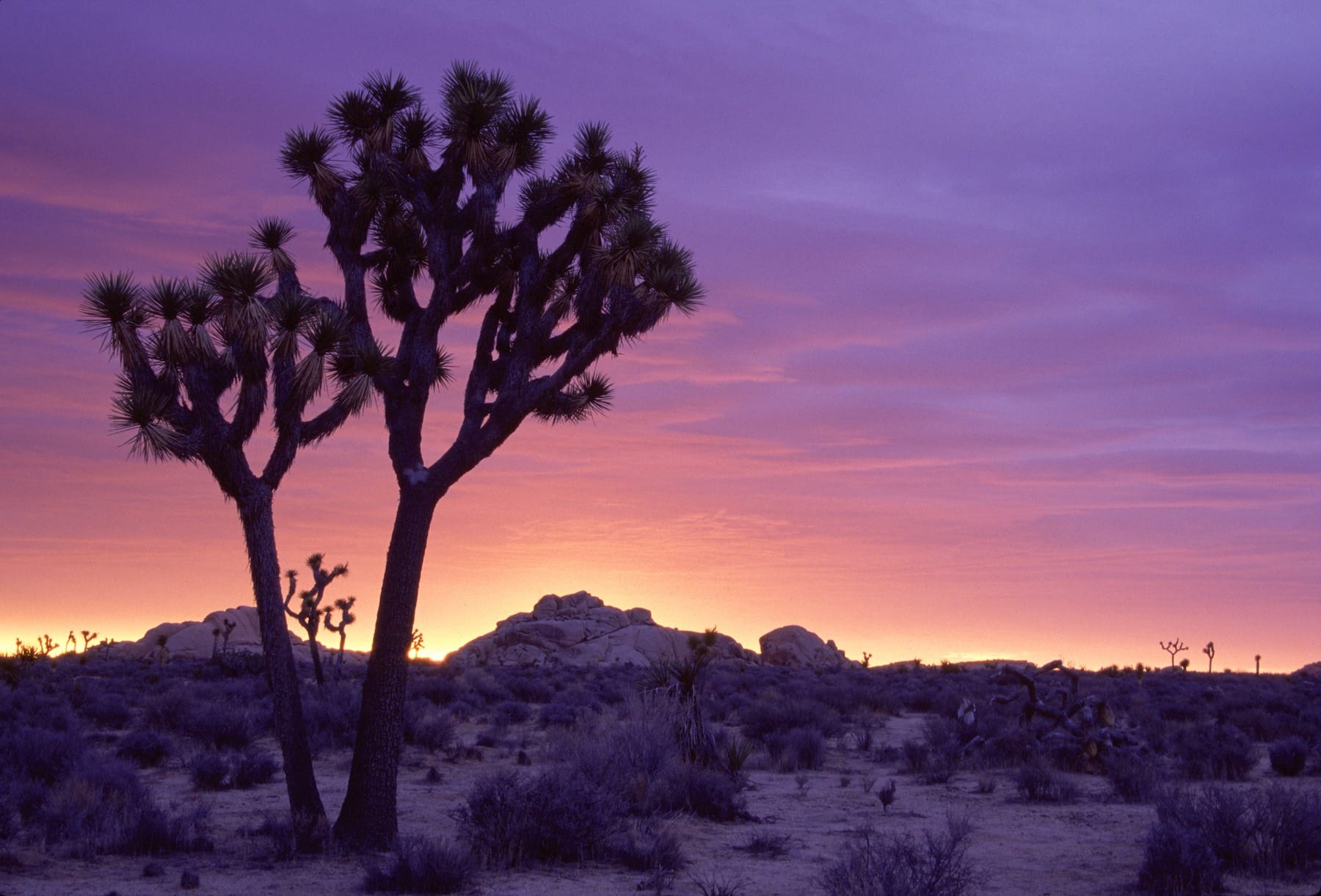
Joshua Tree exists at the meeting point of two desert ecosystems — the higher, cooler Mojave and the lower, hotter Sonoran — and the Yucca brevifolia, the tree that gives the park its name, grows only in the Mojave section, at elevations between roughly 2,000 and 6,000 feet. A mature Joshua tree can reach 40 feet, live 150 years, and produce an architecture — gnarled upward-reaching branches, each ending in a dense rosette of spiny leaves — that is biologically specific to its ecosystem in ways that no other tree in North America replicates. The park also contains one of the most significant concentrations of native California fan palms in the state, concentrated in five oases fed by underground fault fractures. Summer visits require an early start; temperatures regularly exceed 100°F by mid-morning, and the park's most rewarding hours are between dawn and roughly 9 a.m.

Nearest metro: San Francisco (~30 min)
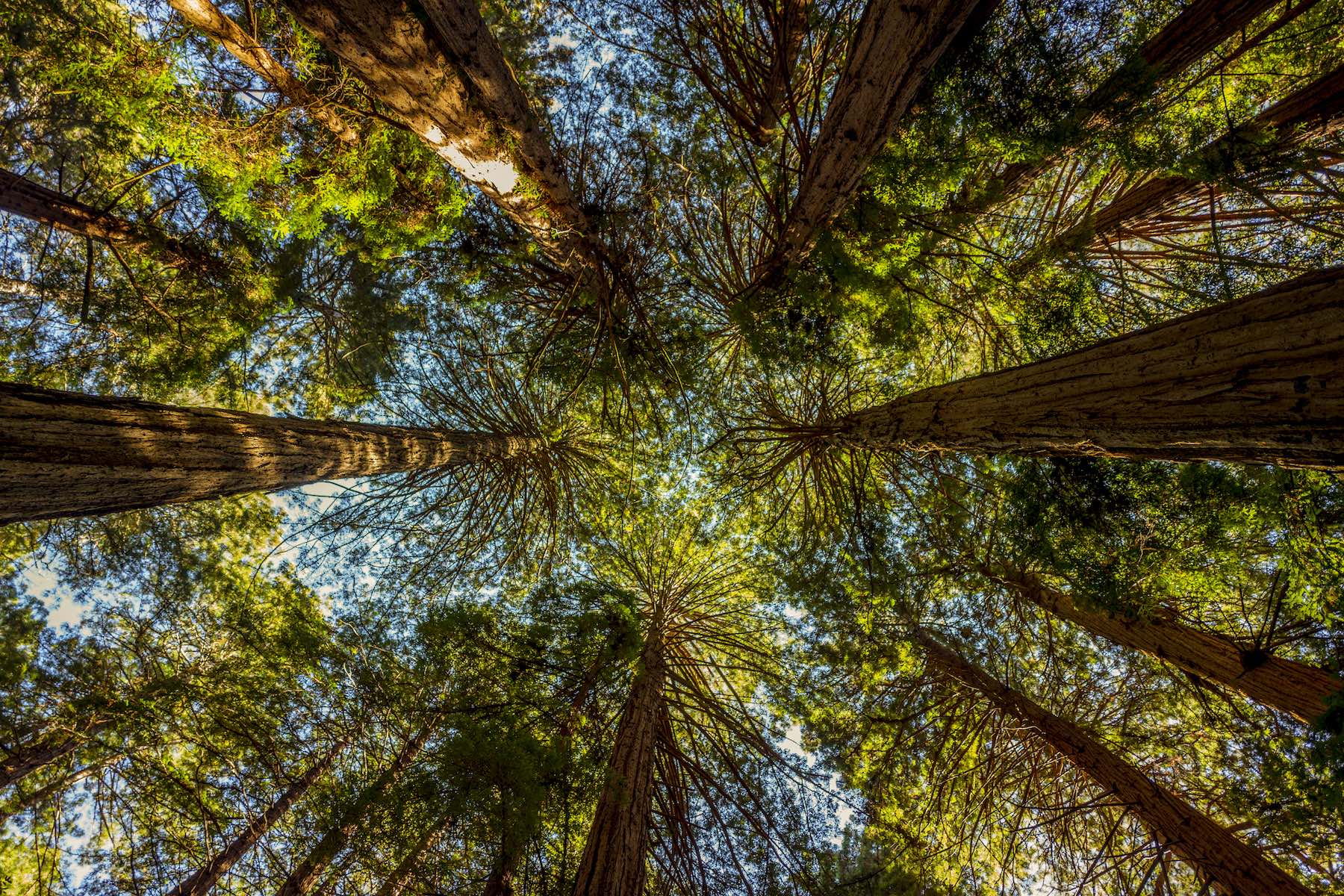
One of the only remaining old-growth coastal redwood groves within the San Francisco Bay Area, Muir Woods covers 554 acres and contains trees that regularly exceed 250 feet in height and 1,000 years in age. The grove survived the twentieth century's systematic clearing of the Bay Area's original redwood forest because Congressman William Kent purchased the land in 1905 and donated it to the federal government specifically to prevent its logging — a transaction President Theodore Roosevelt honored by designating it a national monument in January 1908. Roosevelt had intended to name it after Kent, but Kent wrote back insisting the honor go to John Muir instead — one of the stranger acts of deflection in conservation history. Parking is reservation-only during peak season; the Muir Woods shuttle from Sausalito or Mill Valley is the more reliable option regardless.

Nearest metros: Los Angeles (~3.5 hrs); Fresno (~1.5 hrs)
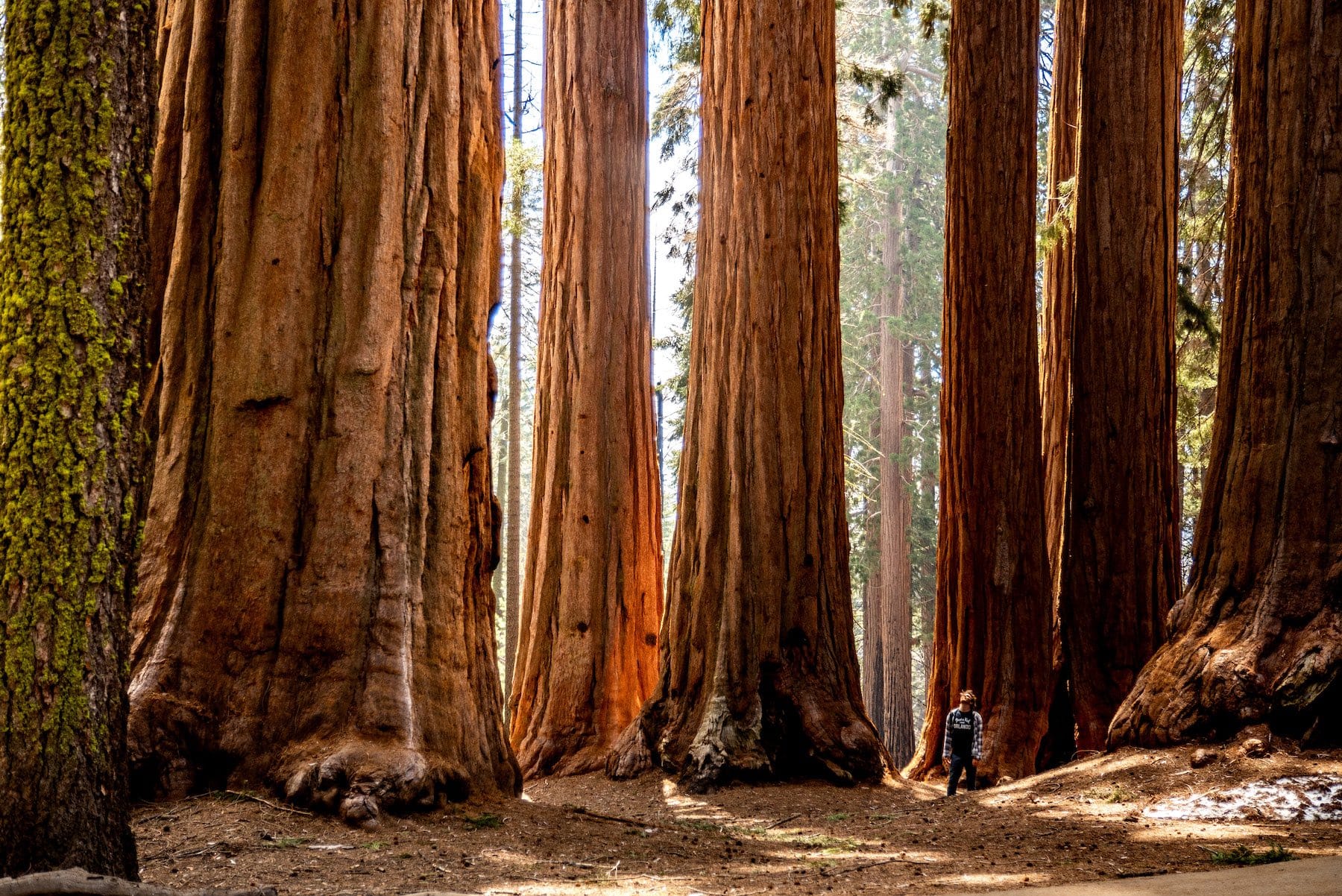
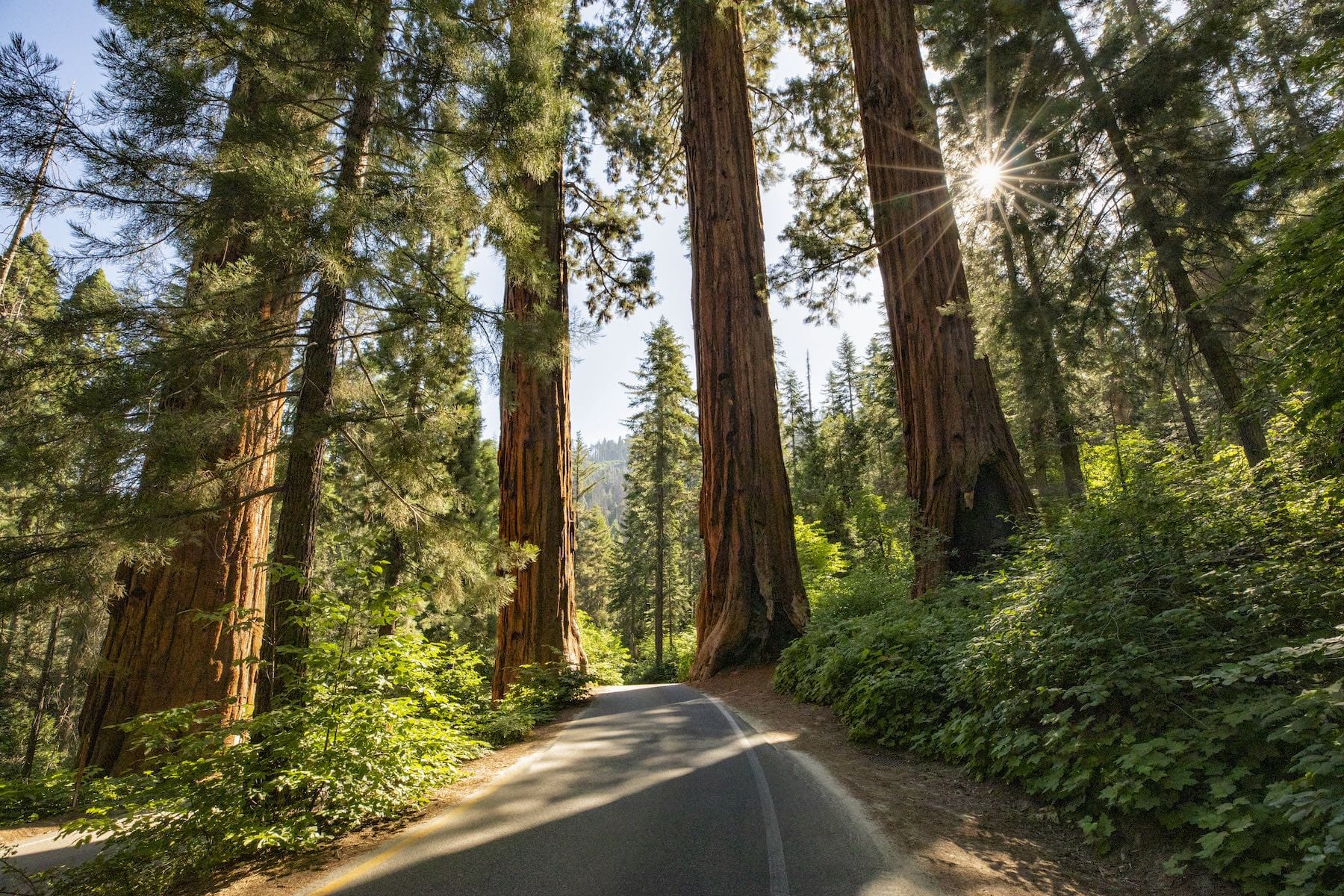
General Sherman, located in Sequoia National Park's Giant Forest, is the largest tree on Earth by volume at 52,500 cubic feet — a measurement that accounts for its 274-foot height, 102-foot circumference at the base, and the fact that it is still actively growing. The giant sequoias here are not the tallest trees in the world (that designation belongs to the coast redwoods further north) but they are the most massive, and the scale is difficult to process from the ground. Kings Canyon, the adjacent park unit, adds a 5,000-foot granite canyon carved by glaciers and one of the largest contiguous wilderness areas in the Sierra Nevada. The drive in on Generals Highway is itself a sustained passage through sequoia forest before any trailhead is reached. The General Grant Tree in Kings Canyon — designated the Nation's Christmas Tree by Congress in 1926 — stands 267 feet tall and is estimated at over 1,600 years old.

Nearest metros: San Francisco (~6 hrs); Portland, OR (~5 hrs)
The coast redwoods growing along California's northern coastline are the tallest living things on Earth; the record holder, Hyperion, reaches 381 feet and was discovered in 2006 in a section of the park not disclosed publicly to prevent visitor damage to the surrounding forest floor. Redwood National and State Parks saw a 91 percent increase in visitation between 2024 and 2025, climbing from 633,707 visitors to more than 1.2 million — a jump that has created real pressure on its most fragile areas. The Tall Trees Grove requires a free permit available at the Thomas H. Kuchel Visitor Center, a system that has kept the grove quiet and the trails largely undamaged. The Prairie Creek Redwoods section, accessible via the Newton B. Drury Scenic Parkway, moves through intact old-growth with Roosevelt elk frequently grazing in adjacent meadows. An overnight in Crescent City or Arcata is worth building into a trip from either direction.

Nearest metros: Denver (~1.5 hrs); Boulder (~1 hr)
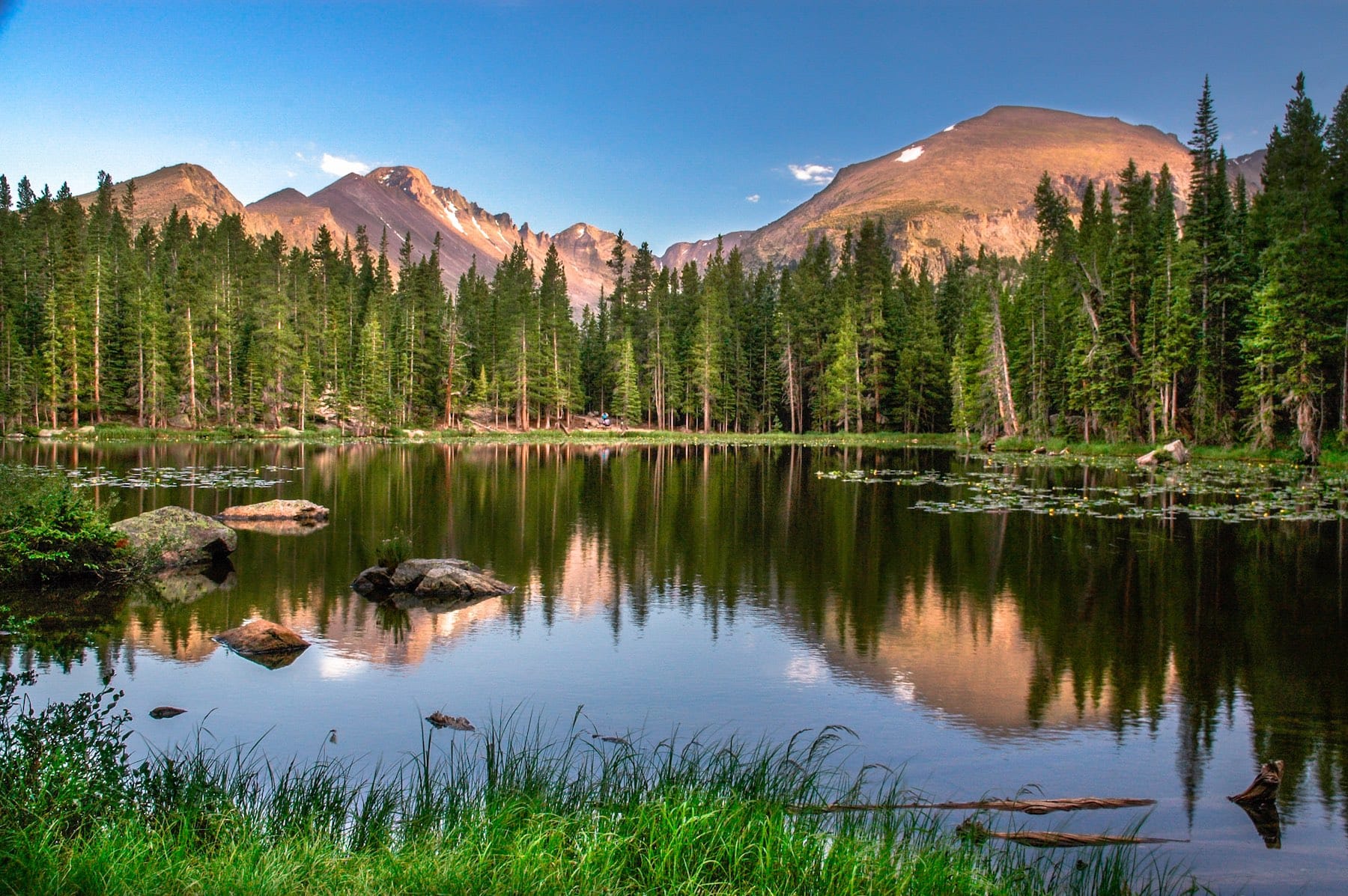
Rocky Mountain drew 4.17 million visitors in 2025, sixth among all national parks, and its forest structure reflects the park's dramatic elevation range: ponderosa pine dominates the lower slopes between 5,600 and 9,000 feet; Engelmann spruce and subalpine fir take over above that, thinning gradually into alpine meadows and tundra above treeline. Trail Ridge Road, which crests at 12,183 feet and is the highest continuous paved road in the United States, passes through all three zones in a single drive — the ecological transitions from dense forest to krummholz to bare tundra are legible and compressed enough to register clearly from a car window. The Beaver Meadows and Bear Lake corridors offer the park's most accessible forest hiking. Timed-entry reservations are required from Memorial Day through mid-October and routinely sell out; the reservation system opens on a rolling basis at recreation.gov.

Nearest metro: Seattle (~3 hrs)
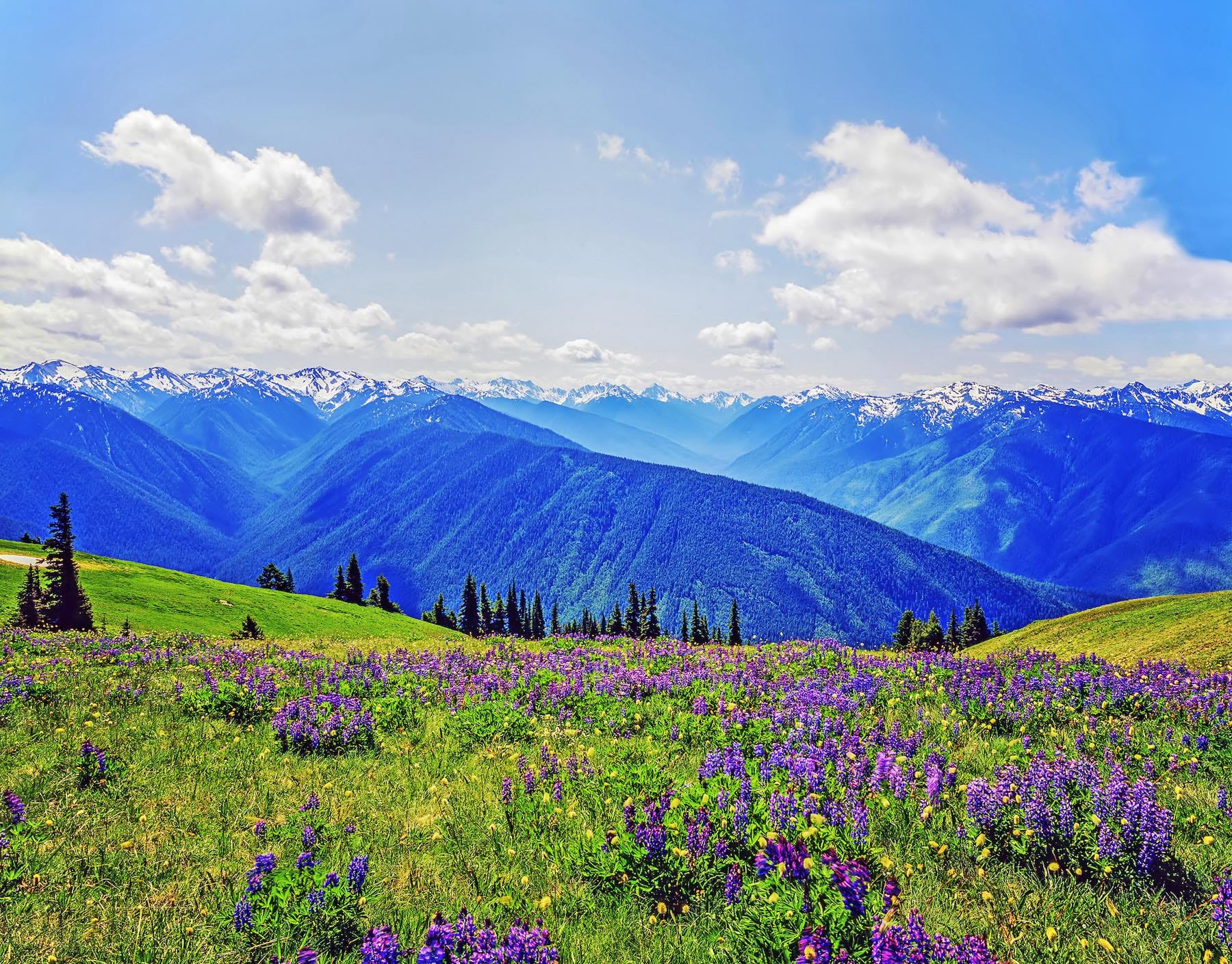
Olympic covers 922,651 acres across three distinct ecosystems — alpine, coastal, and temperate rainforest — and the Hoh Rain Forest is its most ecologically specific offering. The Hoh receives between 12 and 14 feet of precipitation annually, qualifying it as one of the few temperate rainforests in the world, a designation that distinguishes it from tropical rainforests not just geographically but structurally: Sitka spruce and western red cedar here grow for centuries without canopy disturbance, producing the layered, moss-draped, fern-covered understory that characterizes the Hoh's distinctive appearance. The Hall of Mosses is a 0.8-mile loop through the most photographed section of the forest. Olympic drew 3.5 million visitors in 2025; the Hoh crowds on summer afternoons — arriving before 9 a.m. changes the experience considerably.

Nearest metro: Portland, OR (~1 hr)
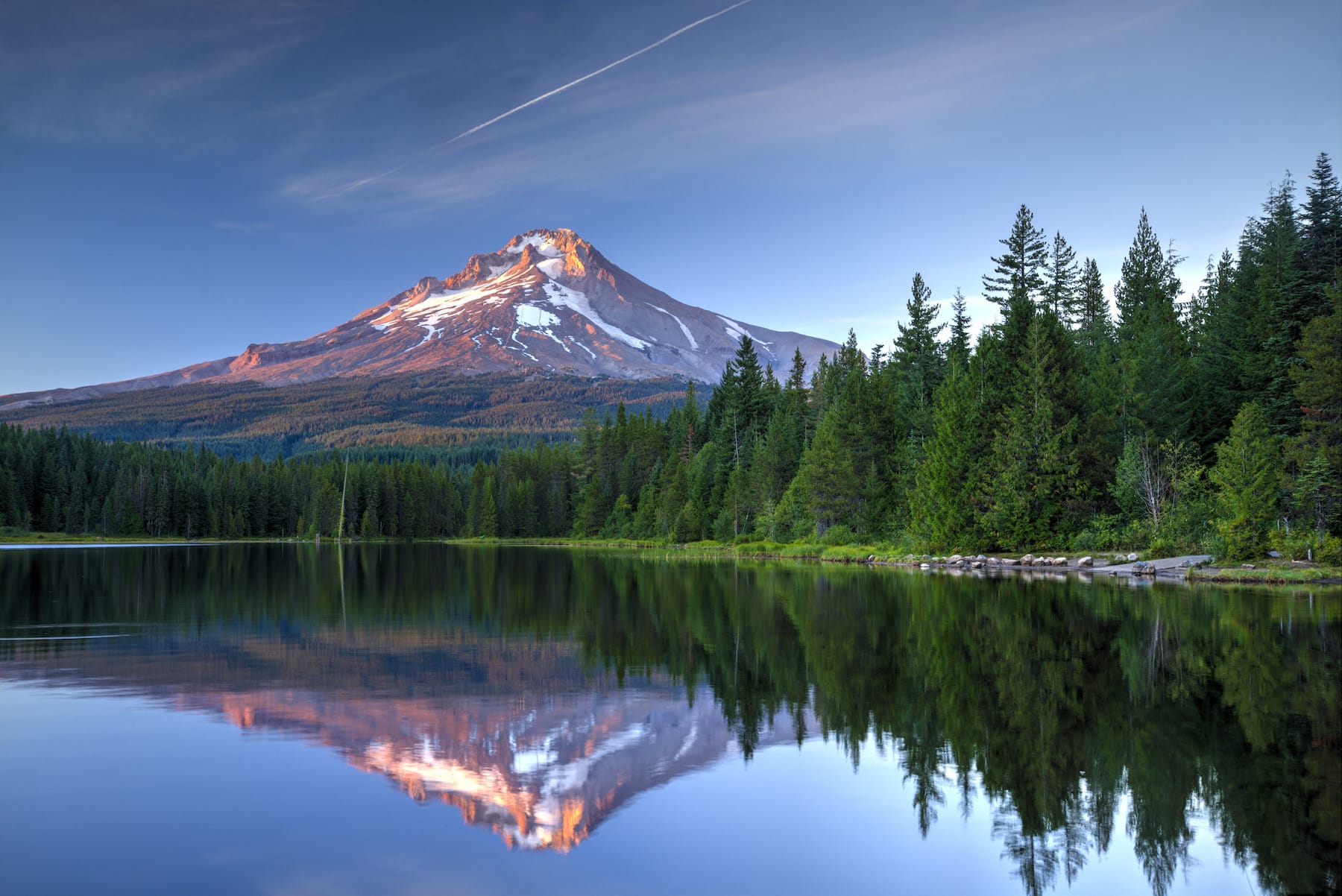
Mount Hood National Forest covers approximately 1.1 million acres of Pacific Northwest fir, hemlock, and cedar surrounding the 11,249-foot stratovolcano at its center. The Ramona Falls Trail — a seven-mile round-trip through old-growth Douglas fir to a 120-foot basalt-column cascade — is the clearest argument for the forest over the mountain as the primary reason to visit. The Historic Columbia River Highway, running along the forest's northern edge through the Columbia River Gorge National Scenic Area, strings together a dense sequence of waterfalls — Multnomah, Latourell, Crown Point — set against moss-covered basalt columns and old-growth canopy. For travelers coming from Portland, this is one of the most accessible entry points on this list: the drive from the city to the trailhead is under an hour.

Nearest metros: New York City (~3.5 hrs); Boston (~2.5 hrs)
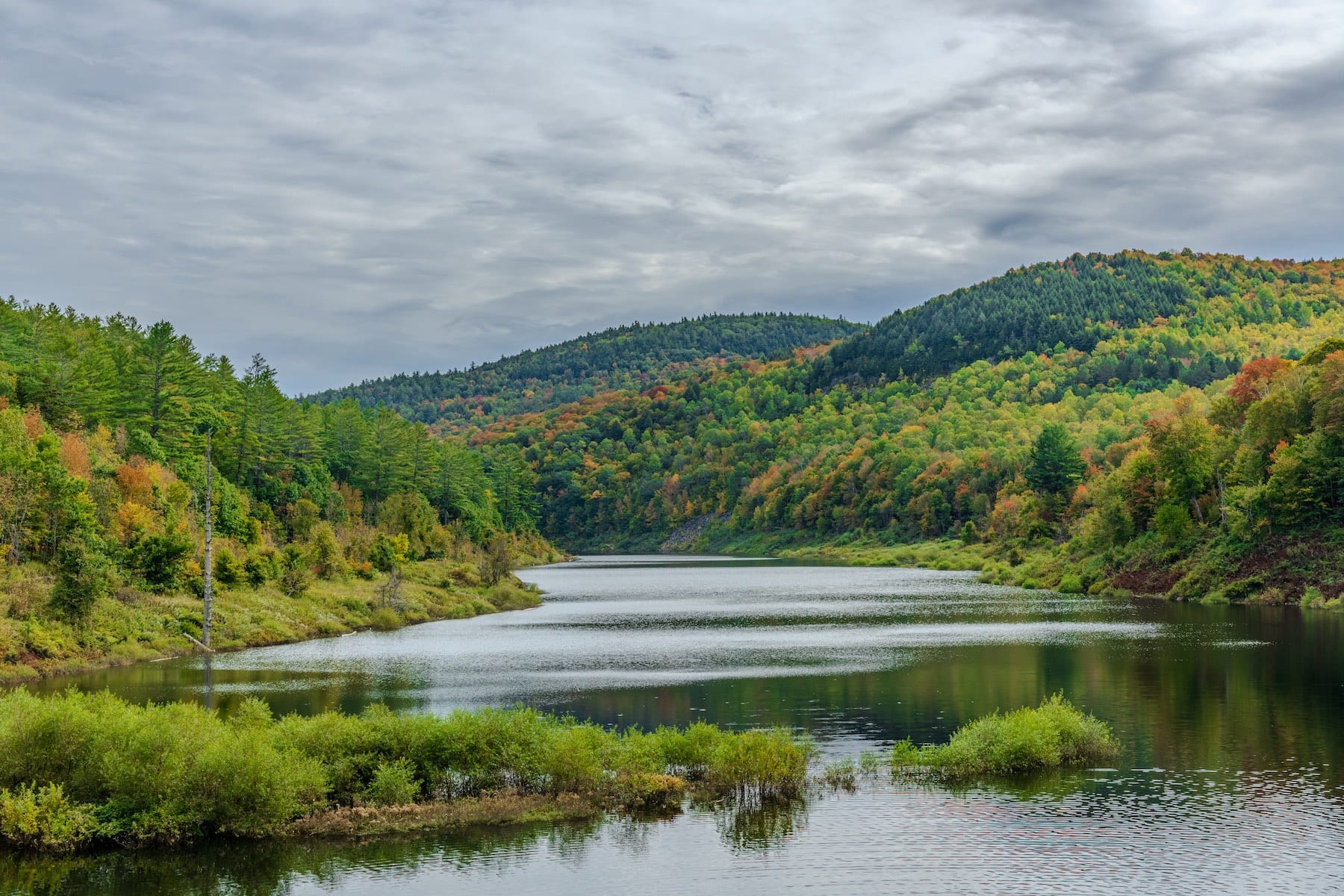
Vermont's Green Mountain National Forest covers 400,000 acres of northern hardwood — sugar maple, American beech, yellow birch — across two ranger districts running through the center of the state, managed alongside private and state lands that form a largely intact forested corridor through the Green Mountain spine. The Long Trail, completed in 1930 and the oldest long-distance hiking trail in the United States, bisects it north to south; the Battell Trail to Mount Abraham offers one of the stronger day hike options on the southern district, with above-treeline views over unbroken canopy below. The forest's sugar maple stands produce the majority of Vermont's maple syrup output and turn the region into one of the most visited fall foliage destinations in the country; in June, those same stands filter light in ways that are worth the drive from either city on their own terms.

Nearest metros: Pittsburgh (~2 hrs); Philadelphia (~4.5 hrs); Cleveland (~2.5 hrs)
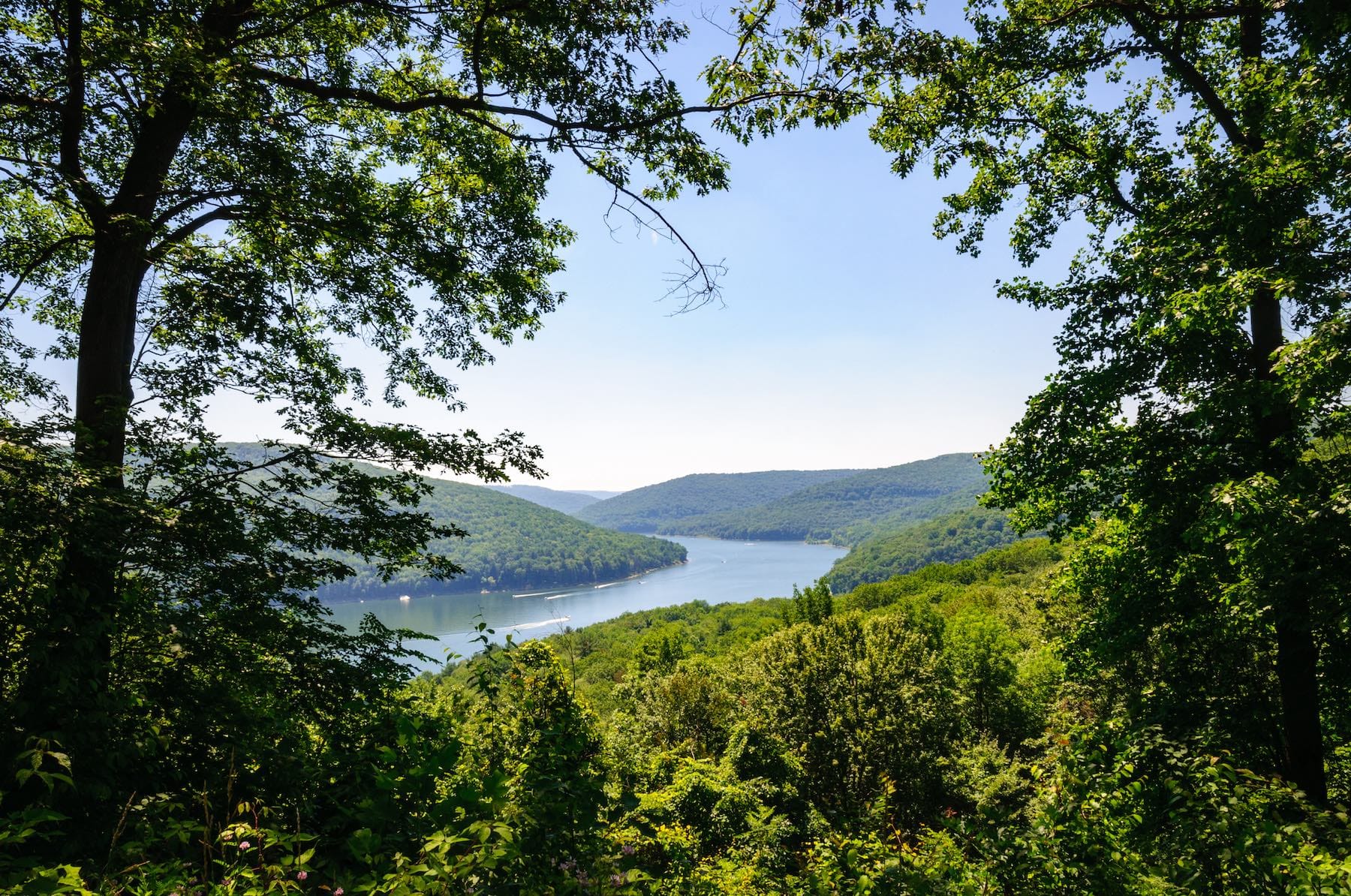
Pennsylvania's only national forest spans 514,000 acres of northern hardwood in the state's northwestern corner — black cherry, sugar maple, American beech, white ash — and includes a section of ecological significance that receives comparatively little national attention: the Tionesta Scenic Area contains some of the last old-growth beech-maple forest on the East Coast, with trees 300 to 400 years old standing in largely undisturbed succession. The Allegheny Reservoir, formed by the Kinzua Dam in 1965, offers paddling along 91 miles of forested shoreline; the North Country Trail, the longest National Scenic Trail in the country at over 4,600 miles, passes through for extended ridge-top hiking in dense canopy. For a forest-centered road trip without the visitation pressure of the more prominent parks on this list, Allegheny represents an unusually strong option within a day's drive of three major metropolitan areas.

Nearest metro: Atlanta (~1.5 hrs)
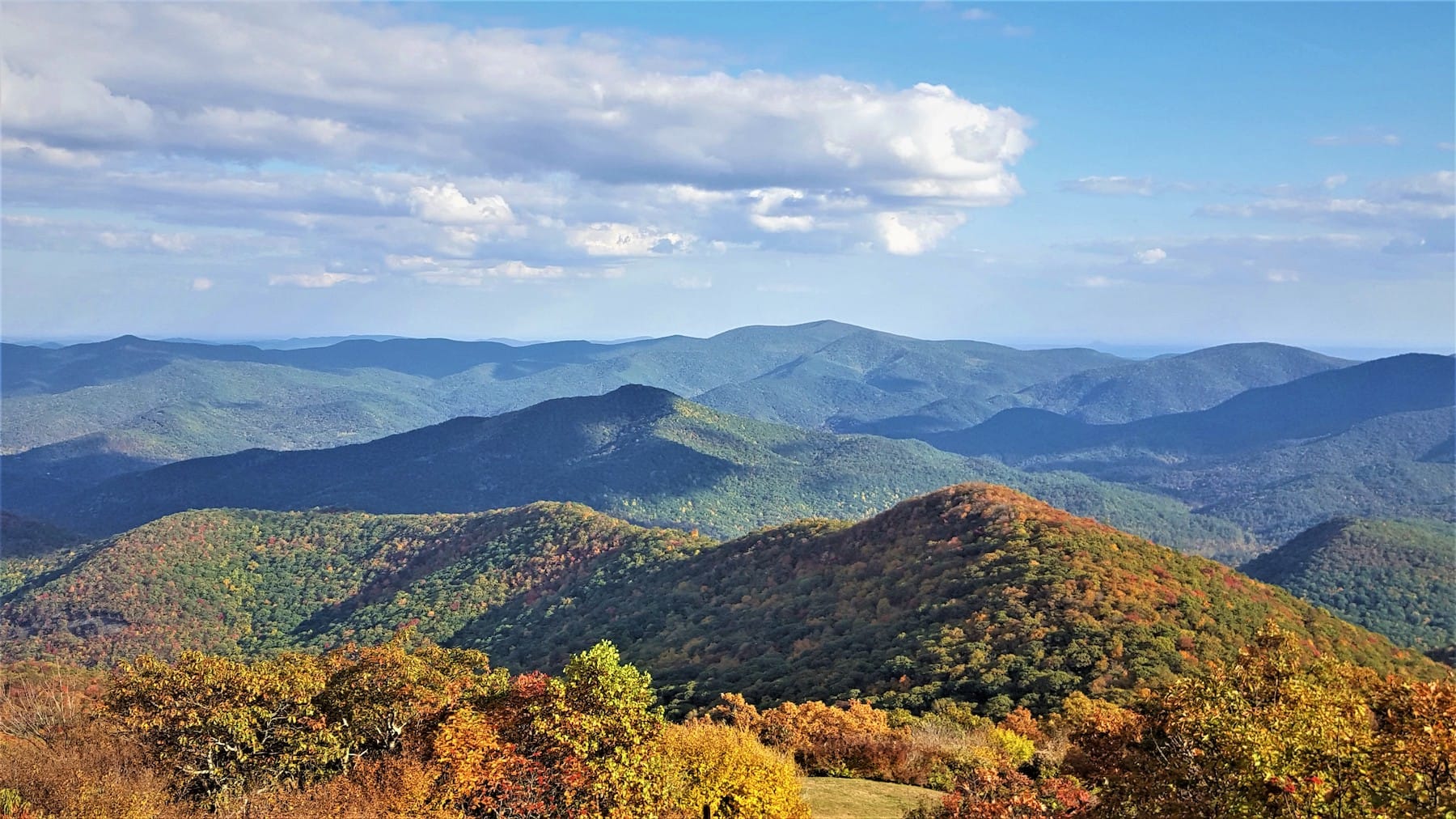
Managed as a single unit, the Chattahoochee-Oconee National Forests cover 866,000 acres across northern and central Georgia. The Chattahoochee, in the Blue Ridge and Ridge and Valley physiographic provinces of the state's northern tier, is the more ecologically compelling of the two for forest-focused visitors: the Cohutta Wilderness Area — one of the largest wilderness areas in the eastern United States at nearly 37,000 acres — contains old-growth hardwood and hemlock, with the Conasauga River running through it. The Appalachian Trail crosses through the forest's northeastern edge. The DeSoto Falls area near Dahlonega pairs two falls with a forested gorge trail; the Anna Ruby Falls trail near Helen offers a fully shaded creek-side walk under a closed deciduous canopy. As the most accessible Southern Appalachian forest from Atlanta, the Chattahoochee is the metro area's primary old-growth day-trip destination.
05/06/2026 by Meaghan Weeden
01/06/2026 by Meaghan Weeden
29/05/2026 by Meaghan Weeden
22/04/2026 by Meaghan Weeden
23/12/2025 by Meaghan Weeden
16/12/2025 by Meaghan Weeden
The Grove is more than just a monthly giving program: it's a vibrant community of individuals who are dedicated to reforestation and environmental restoration on a global scale.