Key takeaways
- Afforestation generally means establishing forest on land that was not previously classified as forest, while some international climate frameworks use a 50 - year threshold to distinguish it from reforestation. This sets it apart from reforestation, the restoring of forest to recently cleared ground.
- The most durable afforestation results depend on selecting ecologically appropriate sites, using diverse and locally appropriate species where planting is needed, taking a longterm approach and ensuring meaningful local ownership. Much of the Sahel's regained tree cover came from farmers managing regrowth on their own fields.
- Across Africa, afforestation is increasingly being considered as one component of broader forest and landscape restoration. The African Forest Landscape Restoration Initiative (AFR100) brings countries together around a shared ambition to restore degraded and deforested land while allowing restoration approaches to be tailored to local landscapes.
Understanding Afforestation: The Slow Work of Growing a New Forest
Burkinabé farmer and agronomist Yacouba Sawadogo spent three decades turning ground that had hardened to dust into lush forest. On abandoned and barren land in Burkina Faso's Yatenga province, he revived an old dryland planting method called zaï — shallow pits dug across a field to catch what little rain falls and hold seeds, manure, and windblown debris until something can take root.
It worked.
Sawadogo saw a forest of nearly 40 hectares and more than 60 species of trees and shrubs thrive on ground the expanding desert had been claiming for decades. In 2018, the Right Livelihood Award (also called the Alternative Nobel) honored Sawadogo "for turning barren land into forest," and across the region he became known as the man who stopped the desert. Sawadogo died in 2023, but his techniques had by then influenced an afforestation movement with tens of thousands of hectares across Burkina Faso and Niger newly forested.
In the Sahel — the band of drylands running from Senegal to Eritrea — Sawadogo’s forest movement spurred a far larger effort. The region is home to 135 million people and to vast stretches of land that drought and clearing has stripped bare. Methods like Sawadogo's spread, and in Niger alone, farmers brought more than 5 million hectares of degraded cropland back into tree cover since the 1980s — a change visible from space! — along the Niger-Nigeria border. What Sawadogo’s afforestation work proved was that degraded, treeless ground can carry a canopy — a discovery particularly crucial as 40 percent of the earth’s land is in need of restoration efforts, according to the United Nations.

What is afforestation?
Afforestation is a forestry practice that applies to various states of ground. The most common candidates were typically once open grassland, desert margin, retired farmland, or scrubland. The United Nations Framework Convention on Climate Change (UNFCCC) draws the line by time, defining afforestation as the conversion of land that has not been forested for at least 50 years into forested land through planting, seeding, or encouraging natural seed sources to take hold. The Food and Agriculture Organization (FAO) frames the same idea by land use rather than the calendar, describing afforestation as the conversion from other land uses into forest, or the raising of canopy cover above a set threshold on land that carried a different purpose before.
Reforestation, afforestation's more familiar cousin, restores trees to land that was forest until recently, such as after a wildfire, a harvest, or a storm cleared it. The FAO describes it as the re-establishment of forest after a temporary condition of thinned or lost canopy on ground that stayed classified as forest throughout.
Restoration after a wildfire on a burned mountainside is reforestation, because the land was recently forested, and the soil, seed bank, and surrounding trees can, with a little help, eventually return to something similar to their former state. But afforested areas carry none of that memory: no established root network, no nearby canopy to seed the ground, often no certainty the site can support a forest at all.
Where afforestation is being considered, practitioners need to establish whether a forest ecosystem is ecologically appropriate and whether planting, natural regeneration, assisted natural regeneration or a combination of approaches is most suitable.

Afforestation benefits
Forests are the most effective carbon capture system currently operating at scale. "Anytime you restore land, you actually have it as a carbon sink," Ibrahim Thiaw, executive secretary of the UN Convention to Combat Desertification, told the World Economic Forum. "And it turns out that land is the largest carbon sink that we have right now on Earth."
Drawing on satellite and ground data across 2001 to 2019, researchers found that the world's forests absorbed roughly 16 billion metric tons of carbon dioxide a year while emitting about 8.1 billion, leaving a net sink of about 7.6 billion metric tons pulled from the atmosphere annually.
But carbon storage isn’t the only benefit of afforestation. New forest, established well, can slow the advance of deserts, hold soil against erosion, improve water infiltration and regulate runoff r, temper local heat, and give wildlife room to move and feed. Afforestation can also contribute to habitat connectivity, soil protection and microclimate regulation.In the drylands where much afforestation is planned, those benefits often carry as much weight as the carbon storage: a band of trees that supports a farmer's soil and shades a village changes daily life in immeasurable ways.
Afforestation does its best work as an addition to the forests already standing; an old forest holds carbon that has been accumulating for centuries, in wood and soil that newly planted stands will take decades to match. Afforestation can support that work by serving as a critical buffer: reducing edge effects such as harsh winds, intense sunlight, and drastic temperature changes. It can also help to decrease fragmentation, expand habitat for vulnerable species, and block human intrusion such as encroaching agricultural runoff, protect against invasive species, and noise pollution.
Afforestation risks and challenges
Not every acre of open land is a forest waiting to happen, though, and treating it that way can do real harm. "While tree planting can be good in some deforested areas, tree planting in Earth's natural grasslands destroys plant and animal habitat and will not sequester enough carbon to compensate for fossil fuel emissions," Joseph Veldman, an ecologist at Texas A&M University, said in a 2019 response to a widely cited proposal to plant trees on a global scale.
The goal of restoration is not to maximize tree cover, but to restore or maintain the right ecosystem in the right place.
“Many of the areas suggested for afforestation are areas where ecologists and land managers are fighting bush encroachment," Sally Archibald, an ecologist at the University of the Witwatersrand, said in the same 2019 response.
Grasslands and savannas store much of their carbon underground, in deep root systems and soil rather than in visible wood, so ground that may appear barren from above may in fact hold a large and stable carbon store that plowing and planting would release. When afforestation is targeted for this kind of land, the new trees can take decades to offset what the disturbance sends into the atmosphere, and the biodiversity lost along the way may not return. For this reason, site assessment should consider historical land cover, existing vegetation, biodiversity, soil and hydrological conditions, fire regimes, land use pressure and community needs before a decision is made to establish forest.
The choice of species is also crucial. Fast-growing single-species plantations put carbon and timber on the land quickly, and they have a role, yet a plantation of one tree repeated across thousands of hectares supports a fraction of the life a varied native forest does, and it tends to be more vulnerable to pests, fire, and disease. Species selection should prioritize native and locally appropriate species, ecological function and long term resilience.
Where afforestation is happening
Another model runs through TerraFund for AFR100, the financing arm of Africa's largest land-restoration initiative. Co-founded in 2021 by the World Resources Institute, One Tree Planted, and Realize Impact, TerraFund channels grants, loans, and equity of $50,000 to $500,000 to locally led nonprofits and enterprises, the grassroots groups its backers consider up to 20 times more effective than larger peers, and verifies their results with field data and satellite monitoring. Its portfolio has grown to 251 projects that have restored 121,000 hectares, grown 43.6 million trees, and employed 138,000 people on about $43 million invested.
Afforestation also runs through the largest restoration pledge on the books. The Bonn Challenge, launched in 2011 by Germany and the International Union for Conservation of Nature (IUCN), set out to bring 150 million hectares of degraded and deforested land into restoration by 2020 and 350 million hectares by 2030, and it has already drawn pledges covering 257 million hectares across 75 countries.
What afforestation success looks like
The difference between afforestation that heals and afforestation that harms comes down to a handful of decisions made before the first seedling goes in the ground. The first is determining whether forest is actually the appropriate ecosystem for the site. The second is site selection, choosing land that will genuinely benefit from forest, such as degraded farmland, eroding slopes, or cleared ground near existing woodland. Importantly, “degraded” does not automatically mean “should become forest.” A degraded grassland, savanna, or wetland may be better restored to its original ecosystem rather than converted to forest. The second is planting native, varied species suited to local soil and rainfall, so the young forest can eventually sustain itself without constant intervention. Where natural regeneration or assisted natural regeneration can achieve the desired ecological outcome, should also be considered before planting. The third is time, since a forest takes decades to grow, and survival through the first dry seasons depends on tending, protection from grazing and fire, and a plan that reaches years past the planting itself.
Success should be measured by both the number of seedlings planted or hectares established and by long term survival, ecological function, biodiversity, soil and water outcomes and benefits to local communities.
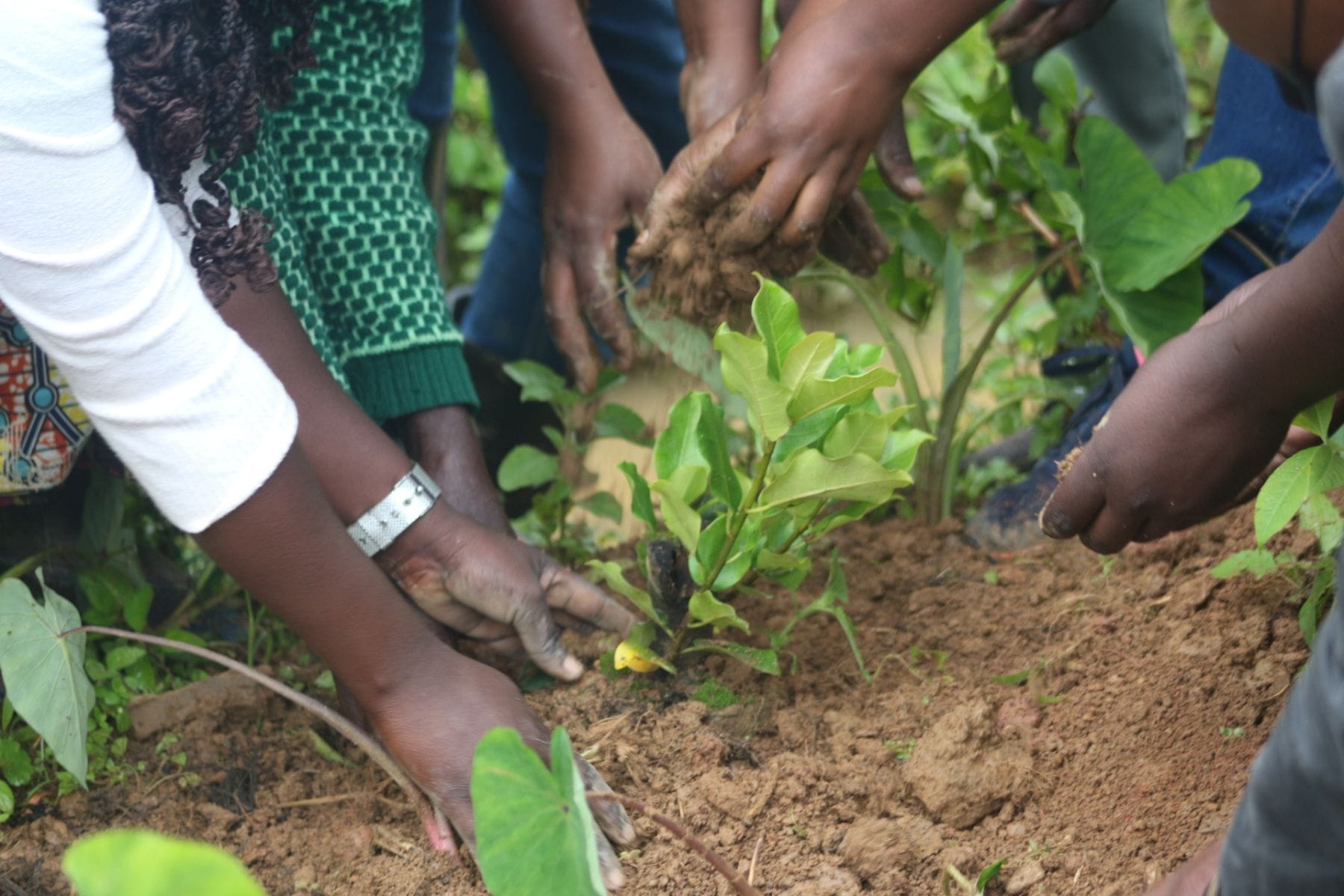
The fourth decision is people. Afforestation that lasts tends to be projects that local communities help design and gain from, whether through the harvest of fruit and fodder, the steadier water and soil the trees provide, or the work the projects create. Local participation is most meaningful when communities are involved in decisions about what is restored, which species are appropriate, how land is managed, and how benefits are shared. The Great Green Wall's shift away from a rigid wall of trees toward community-led land management reflects this, and its progress has come fastest where farmers and villages had reason to keep the trees alive rather than watch them wither once the funding moved on. “Put responsibility in the hands of the farmers," Chris Reij, a sustainable land management specialist and senior fellow at the World Resources Institute, told Smithsonian magazine of the Sahel's regreening. "They know what their best interests are."
Two decades after Sawadogo inspired afforestation efforts, the work is still going. A $222 million restoration program launched across eight Sahelian countries in late 2025, and in Niger a separate effort restored roughly 210,000 hectares and trained close to 67,000 farmers, who recorded yield gains of about 30 percent. "Field-level intervention budgets have grown, the project portfolio has expanded," Almoustapha Garba, executive secretary of the Pan-African Agency of the Great Green Wall, told Forests News, "and we are rolling out more structured programmes to advance the 2030 targets."
Much of the tree cover the region has regained so far came from farmers managing the regrowth on their own fields, often ahead of the official planting zones. Efforts by those farmers "must form the backbone" of any push to bring trees back to Africa in a meaningful way, Tougiani Abasse, a senior researcher at Niger's National Agricultural Research Institute, told Yale Environment 360. Reij points to what has been achieved in the last 20 years in the Sahel as a sign of progress. “I am more optimistic now than when I started working in the Sahel in 1978,” he said.