Our projects focus on restoring priority landscapes around the world—places where forests can make the biggest difference for nature and communities.
Click here to learn about our work
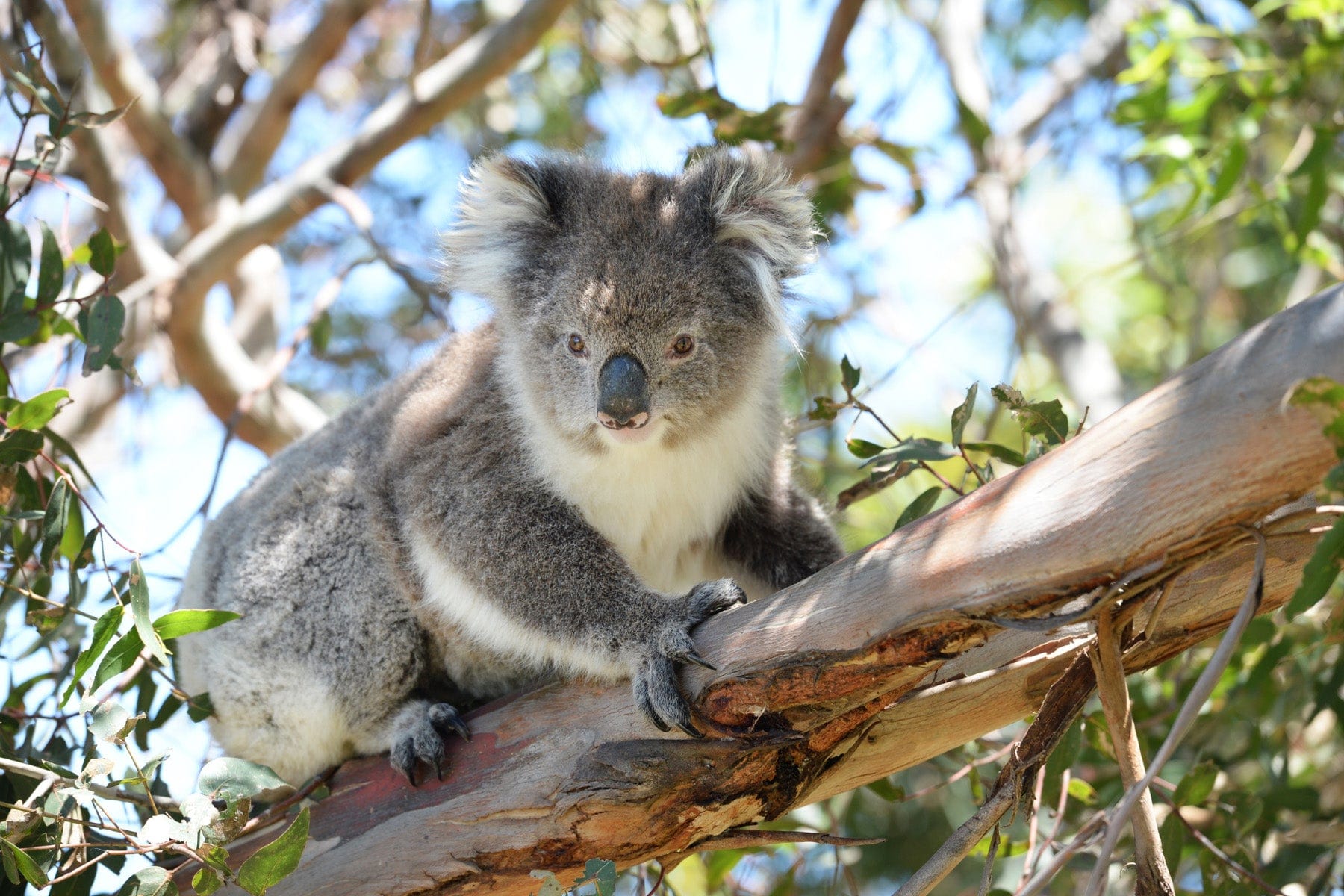
Koalas are an iconic species native only to the land down under, making them as quintessentially Australian as kangaroos and emus. Unfortunately, they face several threats in a warming world: they are considered vulnerable by the International Union for the Conservation of Nature (IUCN), and endangered in three Australian states.
Wild koalas are an indicator species, revealing the health (or lack thereof) of the ecosystems they rely on — and clearly, they are under increasing pressure. One Tree Planted is actively working to restore koala habitats through reforestation in Australia.
In the spirit of some serious Koala appreciation, we’ve compiled a list of 11 facts that highlight why we love this wildlife species.

Observed every year on May 3rd, Wild Koala Day was established by concerned koala conservationists across Australia to celebrate the species and protect their habitats. Anyone is welcome to celebrate, and is encouraged to pin a gum leaf to their shirt, change their profile photo to a koala, and share a koala photo on social media, tagged #wildkoaladay.

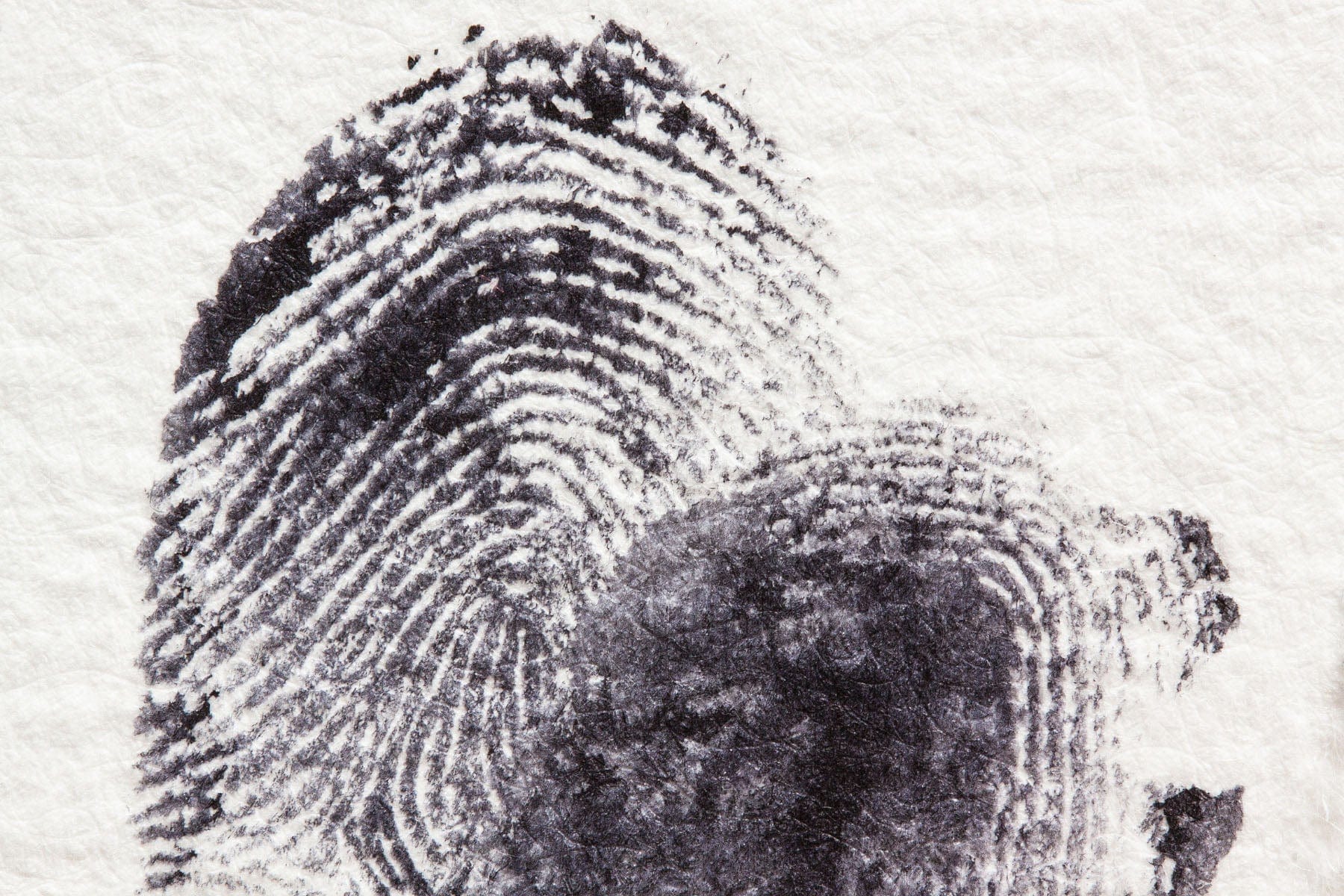
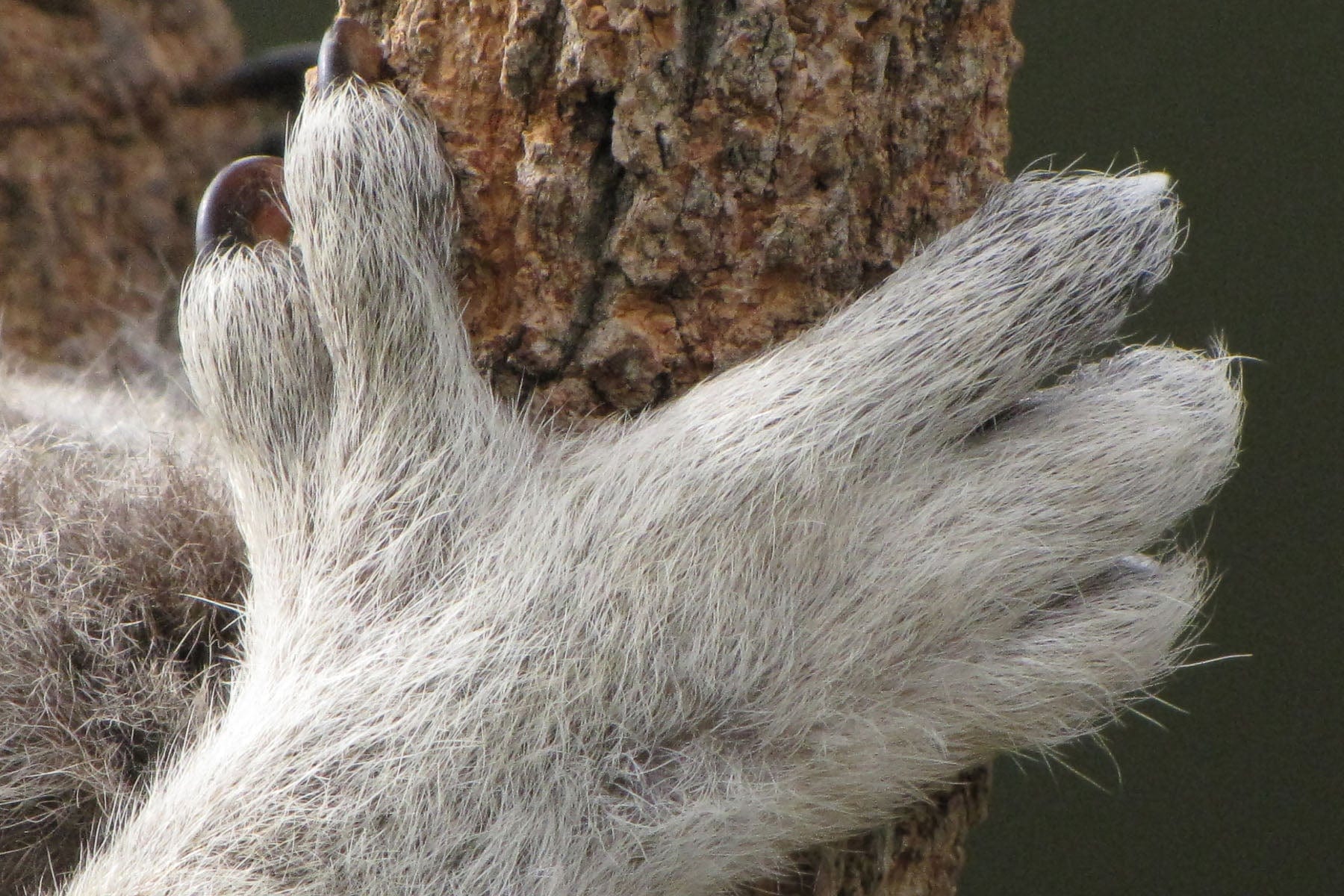
In fact, they’re the only animals other than primates that have them — and just like us, each individual has a unique print. Scientists have hypothesized that koalas evolved fingerprints to help them navigate tree branches, while also harvesting the eucalpytus leaves that make up their diet.

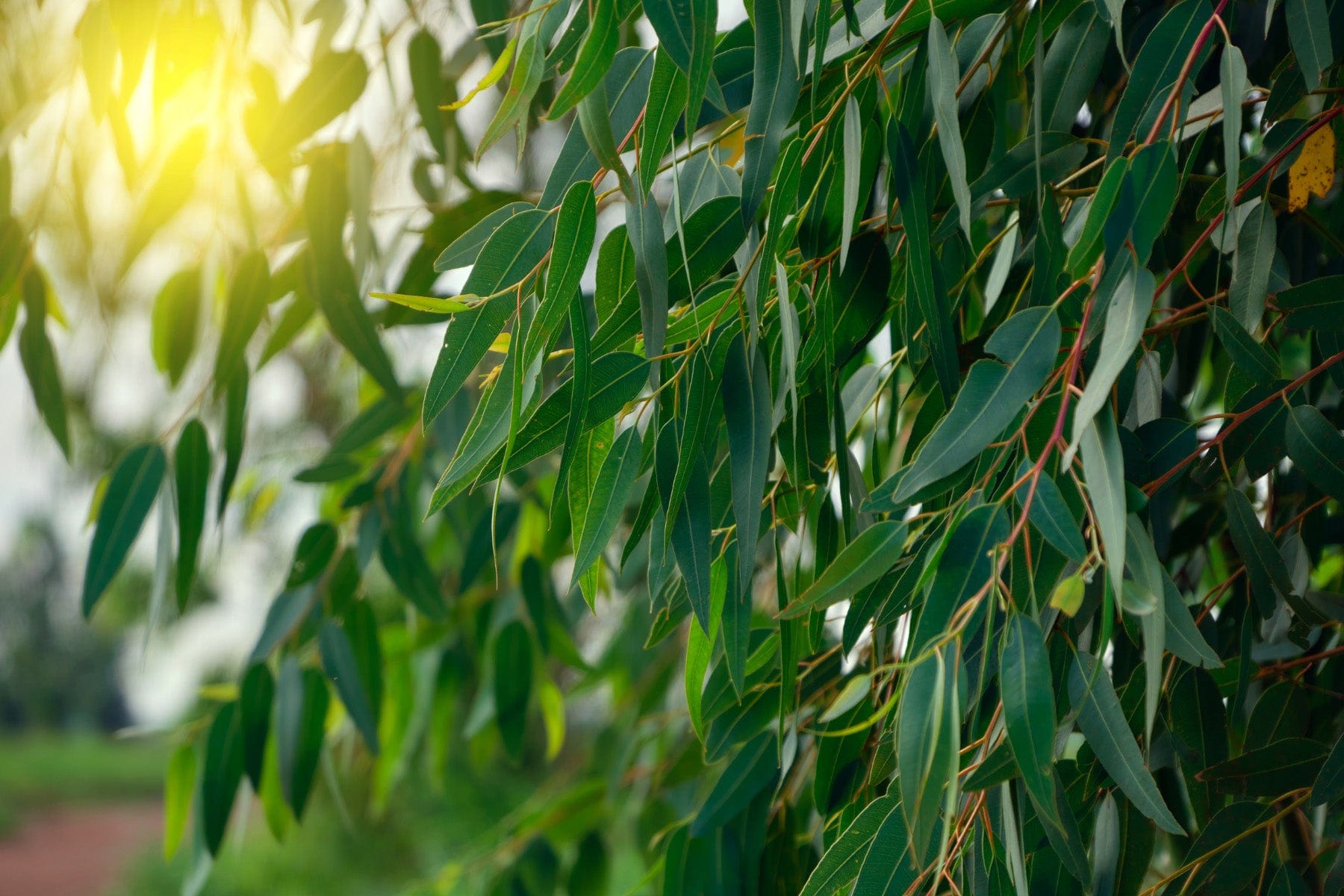
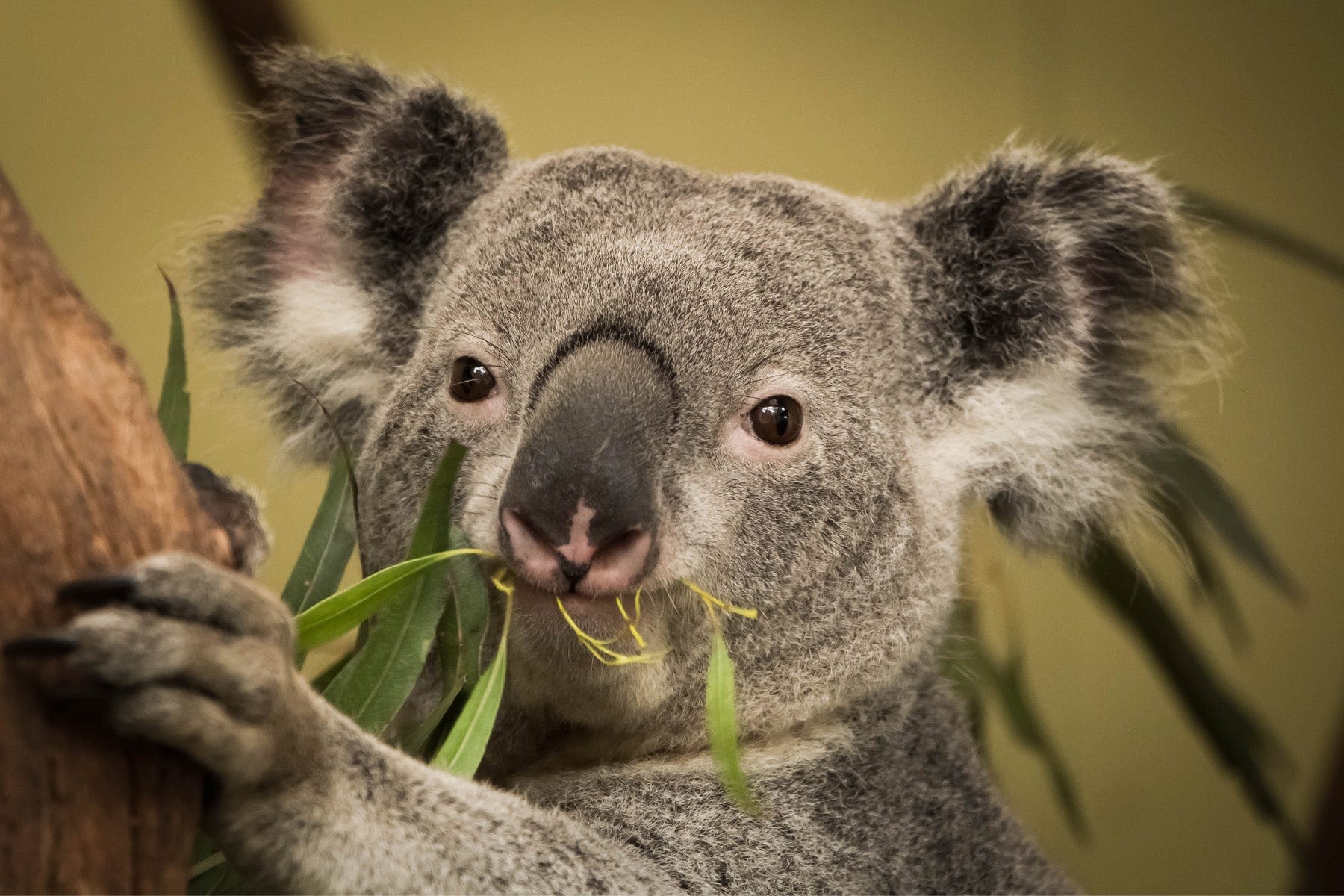
Their name comes from the Dharug Aboriginal word gula and means “no drink." And in fact, Koalas don’t need to drink very much water because most of their hydration needs are satisfied by their dietary staple, eucalyptus leaves. They can and do drink from creeks and water holes if necessary, but if you see a koala drinking, it’s probably in distress.

While mature males tend to have a stronger, muskier odor, females and juvenile males give off a slight eucalyptus smell — which doubles as a natural insect repellent! The person that coined "you are what you eat" must have been thinking of Koalas!

Although there are over 600 types of eucalypt in Australia, individual koalas tend to only consume leaves from 1-3 species. That means a koala in New South Wales has a different diet from a koala in Queensland. While eating, they will climb to the very top of the tallest trees to get the best leaves, which contain more liquid and nutrients.

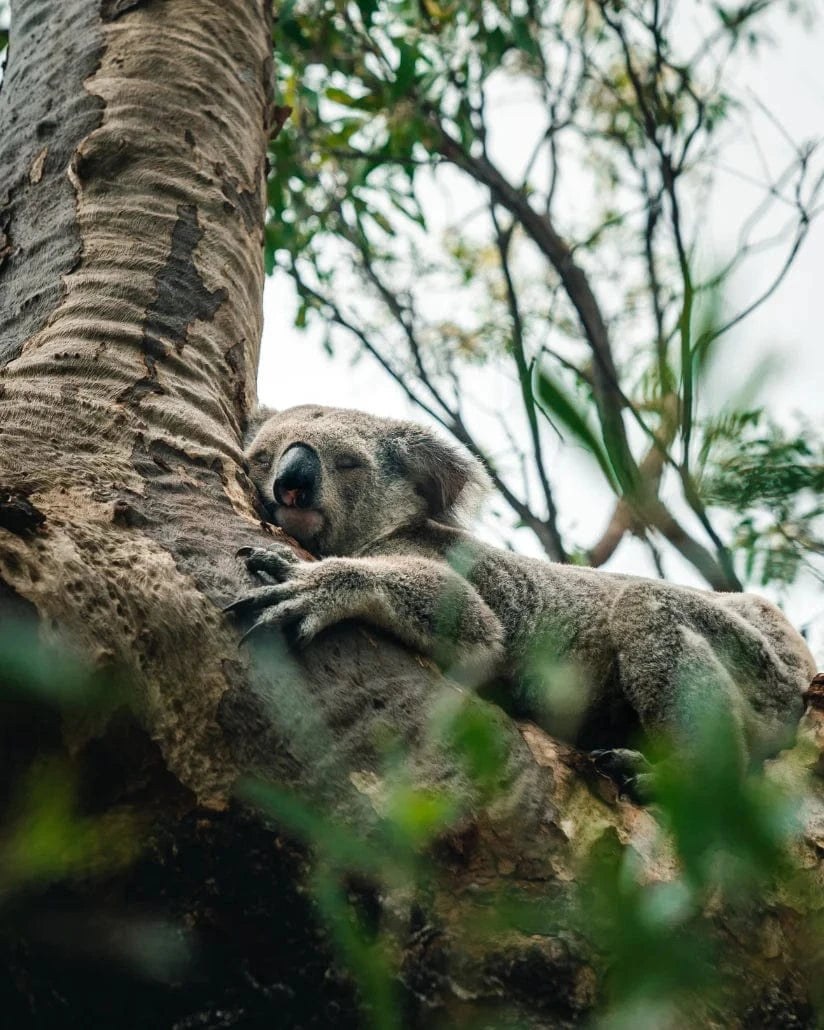
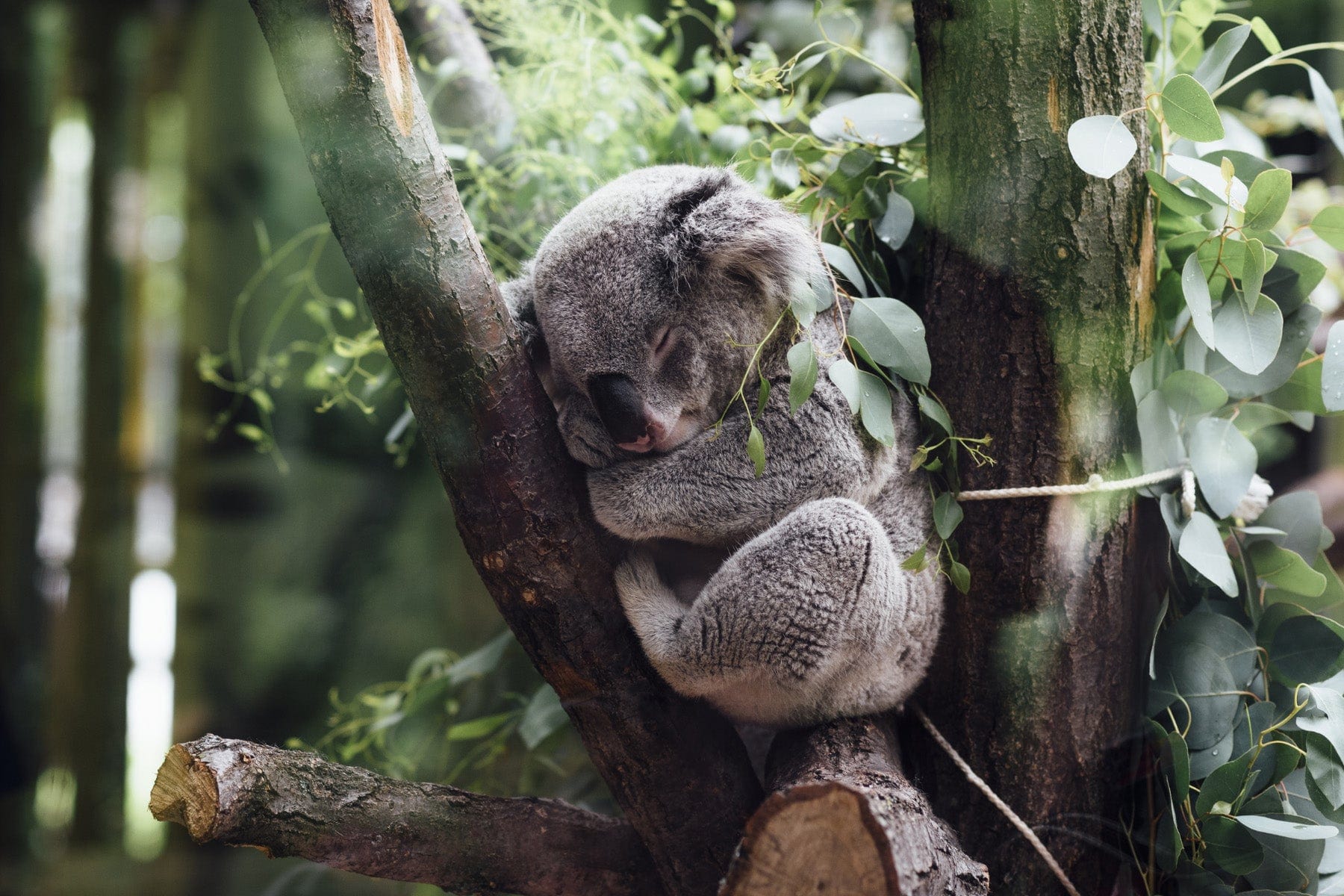
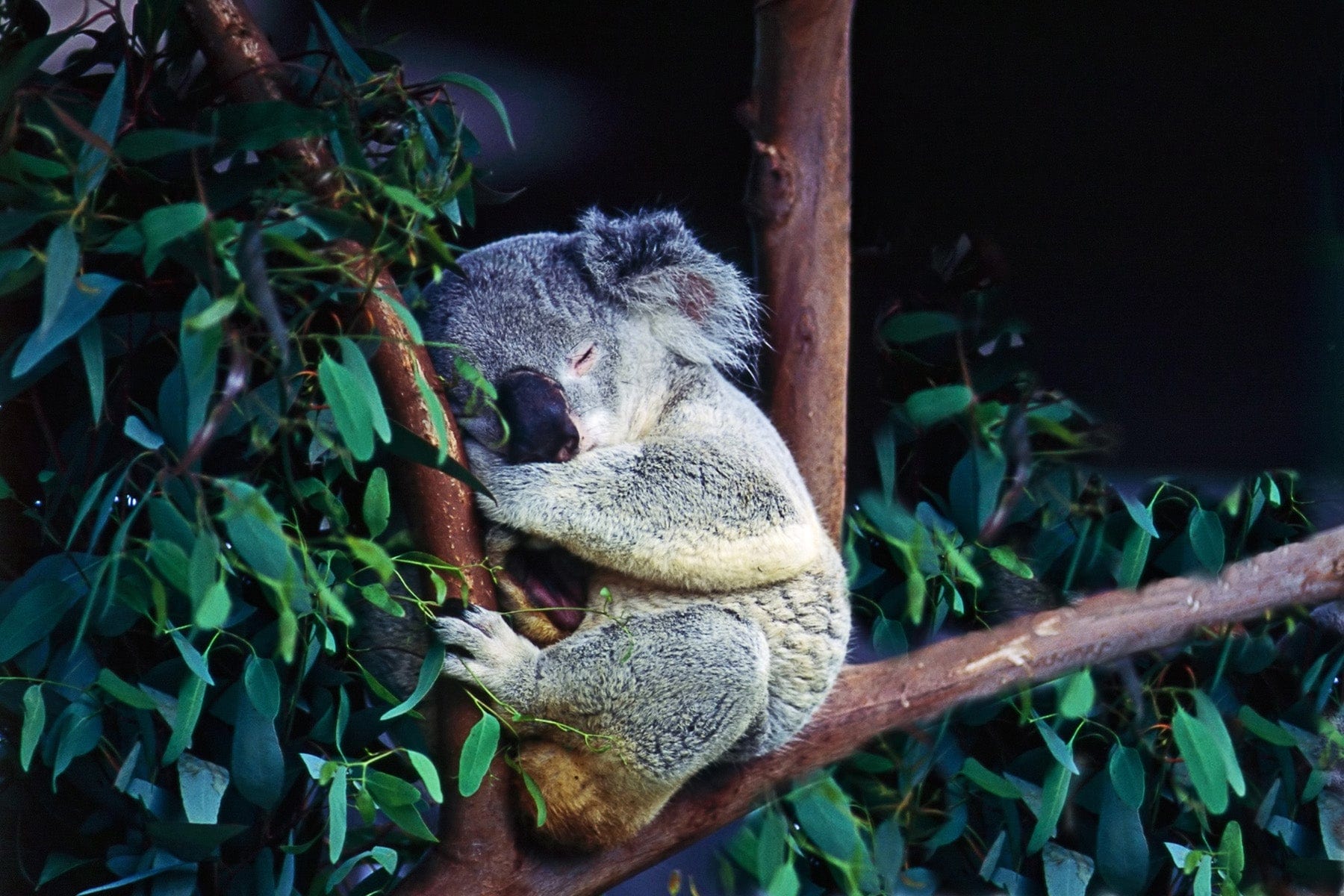
Their main source of food, eucalyptus, is toxic, fibrous, and not very nutritious. And while they have an unusually long caecum to help them digest and break down fiber, they’re only able to absorb about 25% of what they consume — which is why they have to eat so much. In fact, an adult Koala eats up to 1 kilogram of leaves…. every day! Think about how you feel after eating a heavy meal, and you’ll understand why they sleep 18-20 hours a day.

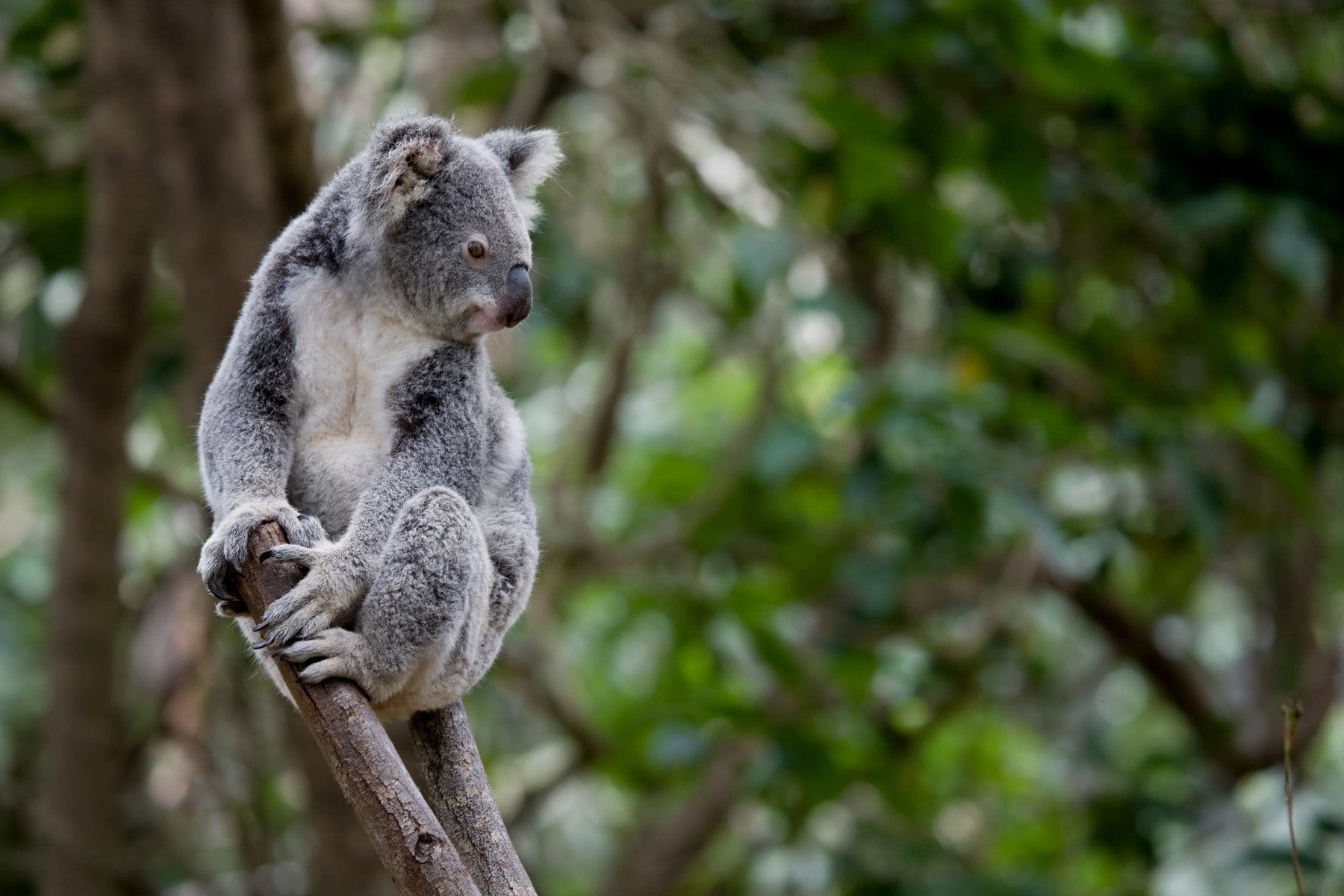
As you might imagine, spending all that time in trees would make for a pretty sore tush. Fortunately, they have strong cartilage at the end of their curved spine, which allows them to live comfortably in their arboreal homes.

As solitary creatures, koalas stick to their home ranges and generally respect each other's boundaries. Dominant males are highly territorial, and will defend their range against other males. Typically, several females live within the range of a single male.

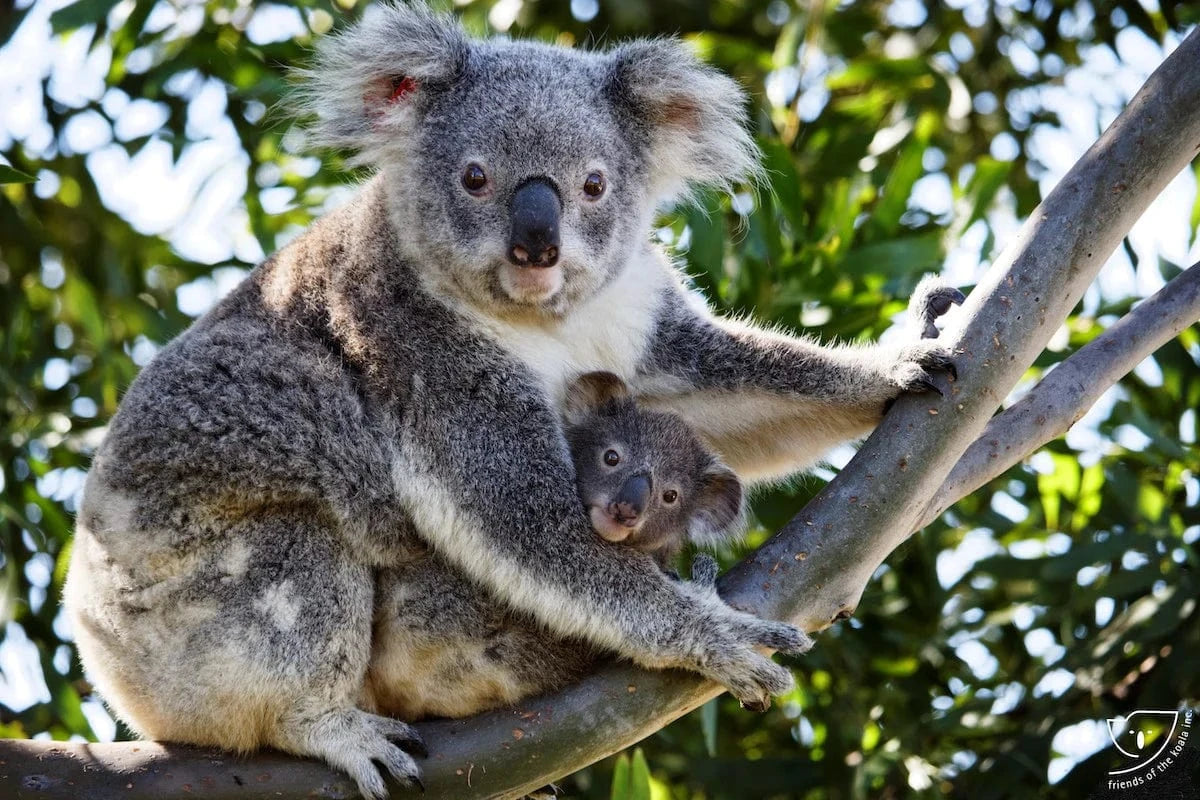
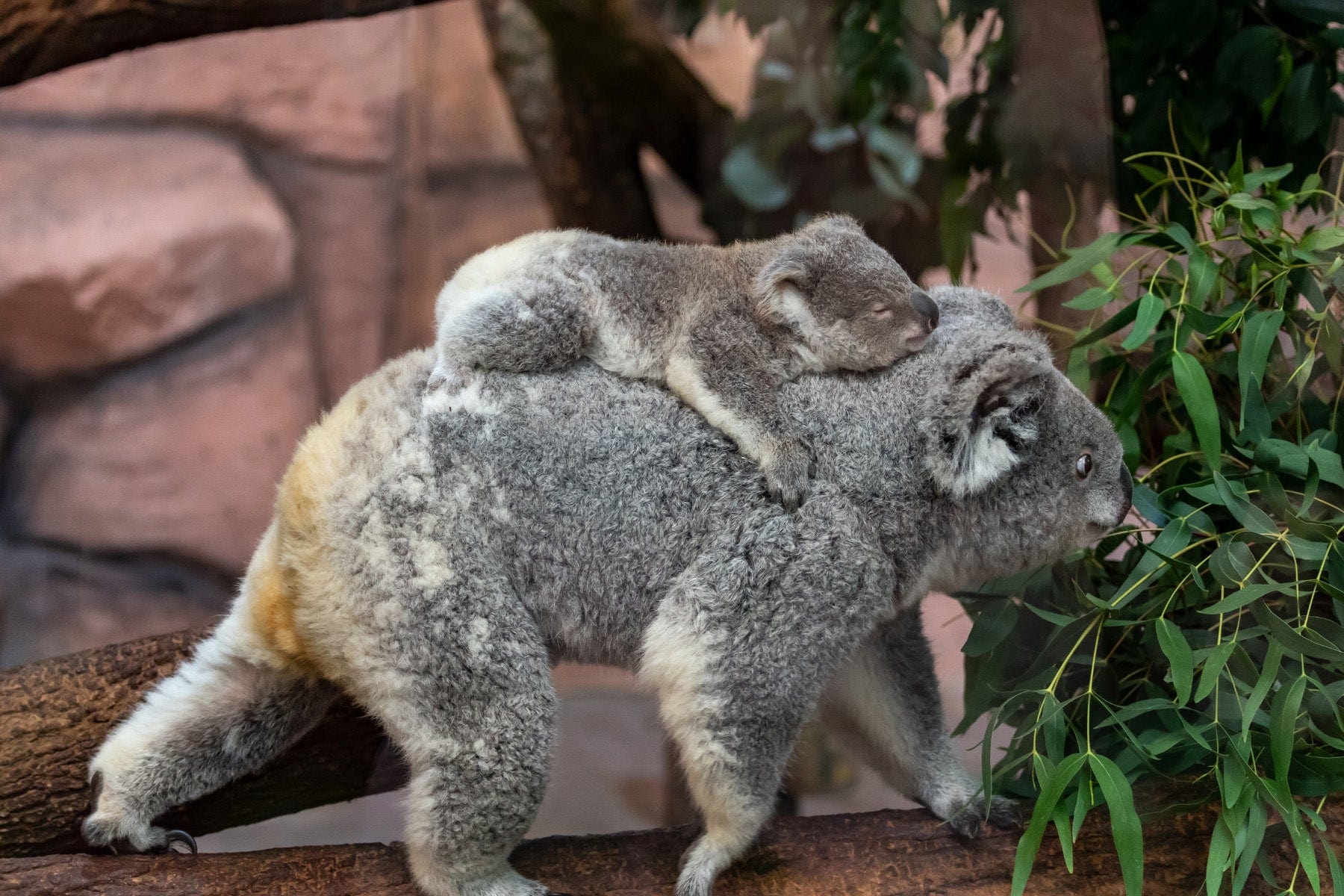
As marsupials, baby koalas (joeys) are born very premature and continue to develop in their mother’s pouch. These deaf, blind, and furless babies rely on their well-developed senses of smell and touch, and an inborn sense of direction to feel their way to safety. They spend about 6 months in the pouch, and then another 6 months or so riding on her abdomen or back. They stay with their mothers until another joey is born, typically after 1-2 years.

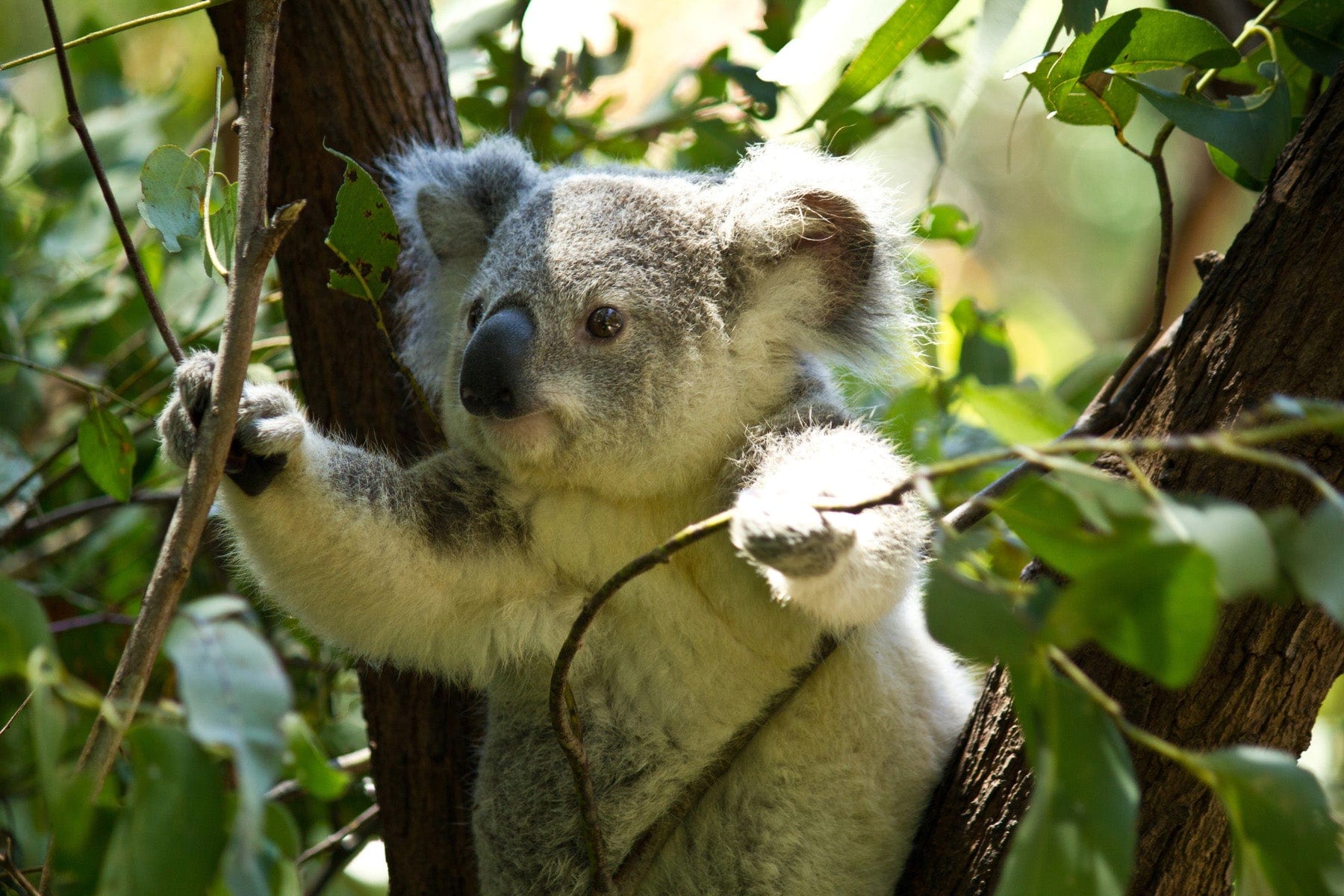
Each front paw has 5 digits, two of which are opposed (similar to our thumbs) and able to move separately from the others. On their hind paws, the 2nd and 3rd digits are fused together for grooming.

A common misconception is that they’re a type of bear, but that’s actually incorrect: the koala's closest relative is the wombat (many, many times removed). As the only living members of their family, phascolarctidae, koalas are unlike anything else on planet Earth today.
The forest habitats that Koalas rely on face relentless pressure from deforestation, urban expansion, and intensifying droughts and bushfires. Combined, these are primary drivers of their Endangered status in Queensland, New South Wales, and Australian Capital Territory. The species also face disease and urban hazards, driving steep population declines in areas like South-east Queensland. Reforestation creates critical wildlife corridors that bridge fragmented koala habitats, allowing them to live and travel more safely.
After reading this list, we hope you’ll agree that there’s more to koalas than meets the eye. Want to help us restore habitat for amazing creatures like koalas? Support reforestation today!
08/05/2026 by Meaghan Weeden
06/05/2026 by Meaghan Weeden
04/05/2026 by Meaghan Weeden
22/04/2026 by Meaghan Weeden
23/12/2025 by Meaghan Weeden
16/12/2025 by Meaghan Weeden
The Grove is more than just a monthly giving program: it's a vibrant community of individuals who are dedicated to reforestation and environmental restoration on a global scale.