Key Takeaways: What Are Mother Trees and Why do They Matter?
- Mother Trees are large, old hub trees that act as central nodes in underground fungal networks, sharing water, nutrients, and warning signals with younger neighbors such as seedlings and saplings.
- They operate through mycorrhizal networks, where fine fungal filaments connect tree roots and form a “wood‑wide web” that transfers carbon, nitrogen, phosphorus, and defense signals across the forest.
- Mother Trees favor their genetic kin, often sending more resources to related seedlings and helping them survive stress, drought, and disturbance, which supports long‑term forest resilience and regeneration.
- Forests function more like communities than collections of individuals, with conifers and deciduous species cooperating underground even while competing for light above ground.
- Protecting and restoring Mother Trees is key for climate‑resilient forestry because their networks help forests regenerate faster, stay healthier, and support biodiversity.
In the Forest, Mother Trees are at the Center of Everything
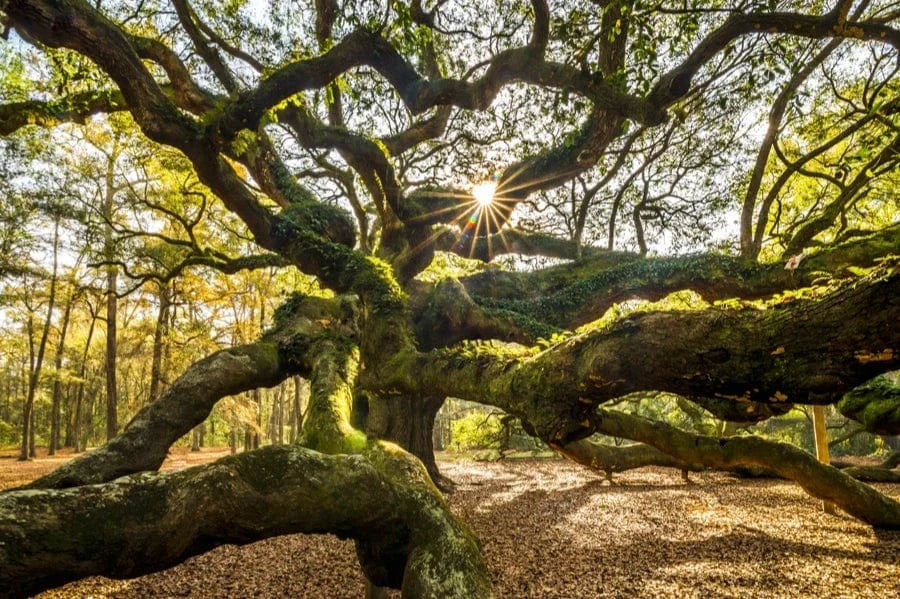
In the quiet of an old forest, a single large tree may be doing far more than you realize. Science now shows that large, old "Mother Trees" act as hubs in vast underground fungal networks, sharing water, nutrients, and even warning signals with younger neighbors. Their networks, known as the "wood-wide web," help forests grow stronger, respond to stress, and recover after disturbances.
At the center of this idea is Dr. Suzanne Simard, a forest ecologist at the University of British Columbia whose decades of research on mycorrhizal networks reshaped how we think about trees. Her work, first popularized in her viral Ted Talk "How Trees Talk to Each Other", highlights how forests behave more like intelligent communities than isolated individuals.
According to Simard's organization, The Mother Tree Project & Program, “Mother Trees are large trees within a forest that act as centralized hubs, supporting communication and nutrient exchange amongst trees.” These massive ancients recognize and favor their genetic kin, share wisdom, support networks of hundreds of trees and saplings, and foster deep connections and alliances.
What Scientists Mean by "Mother Trees"
Mother Trees are typically large, old, highly connected hub trees that play a central role in the structure and function of a forest. They are not literally “mothers” in a human sense, but they behave like matriarchs: they link to many other trees through a shared mycorrhizal network and help sustain seedlings, especially in stressful conditions.
Simard has described Mother Trees as the “nexus for nutrient distribution” in a forest, sending carbon and resources to younger trees through their roots and fungal partners below ground. In her research, she and colleagues measured carbon moving from these large trees to nearby seedlings, suggesting they can boost survival and growth during establishment.
In a study co-authored by Simard, it is stated that "Much like social networks or neural networks, the fungal mycelia of mycorrhizas allow signals to be sent between trees in a forest. These mycorrhizal networks are effectively an information highway, with recent studies demonstrating the exchange of nutritional resources, defence signals and allelochemicals. Sensing and responding to networked signals elicits complex behavioural responses in plants. This ability to communicate ('tree talk') is a foundational process in forest ecosystems."
A Few of the Amazing Things Mother Trees Do:
- Use their deep roots to draw up water and share it with shallow-rooted seedlings.
- Detect the distress signals of neighboring trees and respond by sending them nutrients.
- Reduce their root competition to make "elbow room" for their kin (saplings that are genetically related to them).
- Direct sugar and other critical resources such as carbon, nitrogen and phosphorus toward the roots of young saplings—with particular attention given to their genetic kin.

Close-up image of Fungal mycelium (Mycorrhizae), which facilitate symbiotic relationships between plants and fungi
How mycorrhizal networks work
The work of Mother Trees is possible by a mutualistic symbiotic relationship between tree roots and fungi. Hair-thin fungal filaments called mycorrhiza extend from a tree's roots into the soil and connect to the roots of other trees, forming a common mycelial network (CMN). When fungal cells interact with root cells, they exchange carbon for nutrients the fungi have obtained by growing through the soil and coating every particle. All of this is happening just a few inches beneath the forest floor.
These networks allow trees to exchange carbon, water, nitrogen, and other minerals. When a disturbance such as wind, fire, or logging creates gaps, the trees that remain — often Mother Trees — can send resources through the network to help new seedlings establish. In Douglas‑fir and other species, researchers have observed that seedlings connected to older trees via mycorrhizal networks regenerate faster and more evenly.
By analyzing the DNA in root tips and tracing the movement of molecules through underground conduits, Simard discovered that in a healthy forest, these tiny fungal threads link the roots of nearly every tree — and that “one teaspoon of forest soil contains several miles of fungal filaments.”
Lessons from the Mother Tree
Elders are Priceless
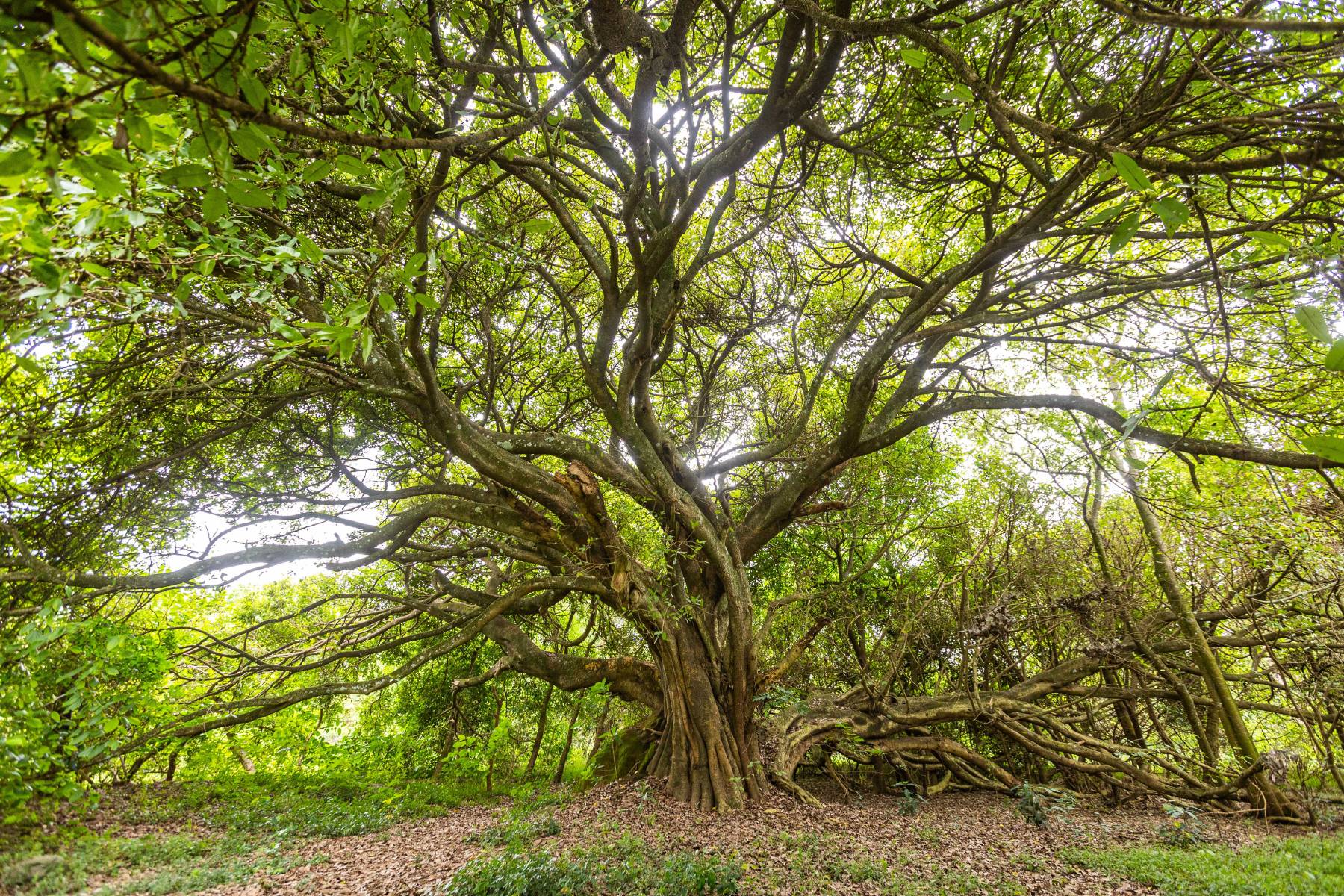
When Mother Trees are injured, dying, or in their twilight years, they deliberately pass their resources on to their genetic kin. In one experiment, Simard found that Mother Trees colonize their kin with larger mycorrhizal networks, send them more carbon, nitrogen, water, phosphorus, allelochemicals, and defense signals, and share messages of wisdom with future generations. While science hasn’t determined exactly how they’re able to recognize their kin, the implications are clear: by supporting them, Mother Trees ensure that their genetic line will run unimpeded.
As noted by forester and author Peter Wohlleben, "The trees in a forest care for each other, sometimes even going so far as to nourish the stump of a felled tree for centuries after it was cut down by feeding it sugars and other nutrients, and so keeping it alive. Only some stumps are thus nourished. Perhaps they are the parents of the trees that make up the forest of today."
The Healthiest Communities Take Care of Each other
Interspecies alliances are common — and necessary — to stay resilient against threats such as insect infestations, tree disease, deforestation, and other disturbances such as drought and wildfire. The relationship between conifers and deciduous species such as Birch and Douglas fir are a perfect example of this. When Birch trees are in full bloom, they can easily shade out nearby Douglas fir. But once birch drop their leaves, fir quickly capitalizes on the extra sunlight. That might seem like proof of competition, not cooperation — but under the surface, these old friends pass nutrients back and forth throughout the year, helping each other stay alive.
Cooperation, Not Competition, Makes us Stronger
While it’s certainly true that trees compete, it’s also true that they work together, forming deep connections and intricate networks. They lean on each other, sometimes literally, for survival — and are stronger for it. Mother Trees provide their more fragile neighbors with essential carbon, water and nutrients to keep them alive. The excess carbon they share alone can increase seedling survival by as much as fourfold. Trees live longer and are more successful in a healthy, stable forest system, so it makes evolutionary sense for neighbors to take care of each other.
Mother Trees remind us of our better nature. They prove that true strength is reflected in our ability to care for each other. Just like a good mom, they remind us to share when we can, and to give a helping hand to anyone who needs it. And the world is, undeniably, a better place for it.


