Key takeaways: What Plastic Production Costs the World's Forests
- Plastic and forest loss are usually treated as separate crises, but they have deep ties. Plastic and forest loss form a feedback loop, each accelerating the other. The August 2025 Geneva treaty talks collapsed over whether to cap plastic production, leaving the core driver unaddressed.
- Extraction comes first. Fossil fuel reserves beneath tropical forests in 68 countries contain an estimated 317 billion tonnes of greenhouse gases. Extracting them often requires clearing forests, causing both ecosystem loss and fossil fuel emissions. These reserves account for an estimated 5.3% of global emissions — more than aviation and shipping combined.
- Plastic degrades the forests that remain. Microplastics in forest soils and tree tissue are estimated to cut photosynthesis by 7–12%, quietly eroding the carbon-absorbing capacity climate models assume stays constant.
- The burden falls unevenly. Wealthy nations export plastic waste to countries with weaker infrastructure, where it's often burned or dumped near forests already under pressure.
- There's no clean material swap. Paper packaging fells roughly 3 billion trees a year—and reforestation can't offset production on its own, though forests remain about a third of cost-effective climate mitigation. The two crises share pressure points and have to be solved together.
It Starts Underground: Plastic, Fossil Fuels, and Forests
The first global treaty to address plastic pollution was meant to be finalized last year in Geneva. Instead, in the early hours of August 15, 2025, after ten days of talks among delegates from more than 180 countries, the negotiations broke down over a single question: whether the agreement should limit how much plastic the world produces. More than 100 countries wanted binding caps on production. A bloc of oil- and gas-producing states, among them Saudi Arabia and Russia, held that the treaty should deal with recycling and reuse and leave output untouched. The committee chair circulated a draft near dawn; delegates declined to use it as a basis for further negotiation, and the session adjourned with no agreement.
"The vast majority of governments want a strong agreement, yet a handful of bad actors were allowed to use the process to drive such ambition into the ground," Graham Forbes, global plastics campaign lead for Greenpeace USA, said after the talks ended.
Nearly a year later, the deadlock hasn’t budged. Delegates elected a new chair, Chilean ambassador Julio Cordano, at a brief organizational session in February, and are due to reconvene informally in Nairobi at the end of June. But the next round of full negotiations is not expected until late 2026 at the earliest.
"It is incredibly difficult for an individual business, or even businesses as a whole, to make unilateral progress on the plastic waste issue," Fisk Johnson, chairman and CEO of SC Johnson, has said. "It takes everyone in the plastic ecosystem … to work collectively together in order to make significant progress and capture economies of scale." The company has pushed for ambitious, coordinated global rules on plastic, a business voice on the side of the governments that wanted an agreement.
The question that broke Geneva — production — remains open.
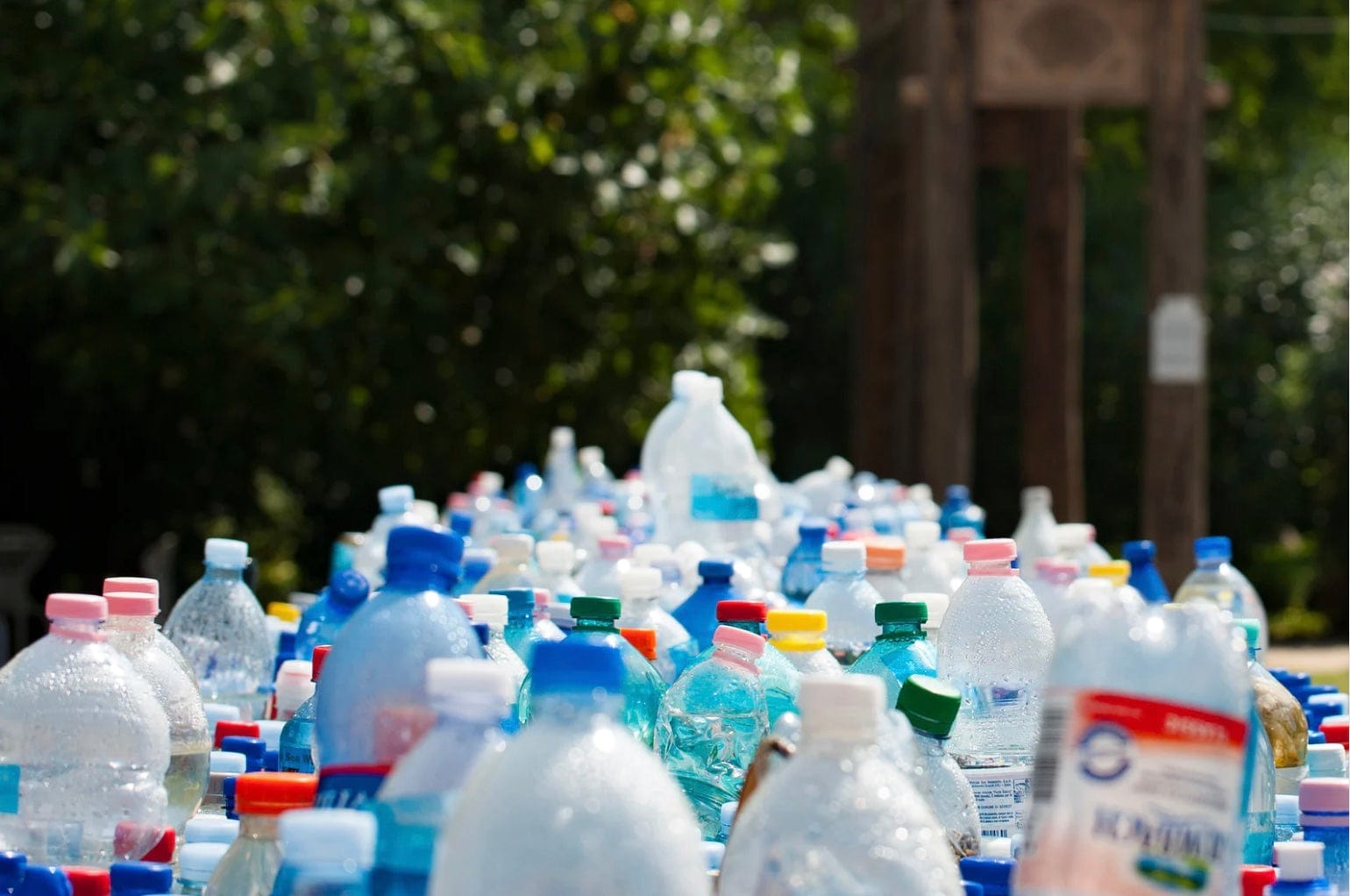
That question is also where plastic and deforestation become two sides of the same coin, though they are rarely discussed in the same conversation. They share a feedback loop, each accelerating the other, but the two are treated as distinct crises, with separate advocates, metrics, and policy conversations. But the volume of plastic the world manufactures is tied to the loss of its forests at both ends — in the extraction and land conversion that come before production, and in the emissions and pollution that follow it and degrade the capacity of forests to absorb carbon. Around 460 million metric tons of plastic are now produced each year, a figure the OECD projects could climb 70 percent by 2040 without stronger policy. Solving either crisis in isolation is harder than the data suggests.

The unaccounted-for extraction costs
Fossil fuel extraction requires infrastructure: roads, pipelines, drilling platforms, processing facilities. That infrastructure cuts through some of the most biodiverse terrain on earth, and the deforestation it causes has its own emissions accounting. The reserves beneath the world's forests put the scale in view: deposits of oil, gas, and coal lying under tropical forests across 68 countries hold an estimated 317 billion metric tons of greenhouse gases, according to a 2025 analysis from the Leave It In The Ground Initiative presented at COP30 — more than the planet's entire remaining carbon budget for holding warming to 1.5°C. Reaching them means clearing the forest above and burning what comes from below.
That's all before the plastic is even made.
Production alone generates approximately 5.3% of global greenhouse gas emissions — more than global aviation and shipping combined. At current growth rates, plastics could consume between 21% and 31% of the remaining carbon budget for 1.5°C by 2050, according to Lawrence Berkeley National Laboratory. Forests and other land ecosystems absorbed roughly 30% of the CO₂ that humans emitted over the last decade, according to the United Nations. More warming accelerates drought, wildfire, and forest dieback, reducing the planet's capacity to absorb the emissions causing the warming in the first place.

When forests disappear, plastic moves in
The pressure runs in the other direction too. Intact forests have long provided communities with natural alternatives to synthetic materials — leaves, bark, and plant fibers used for packaging, tools, and storage across generations in Southeast Asia, West Africa, and South America. As those forests disappear, cleared for agriculture, logging, or fossil fuel infrastructure, communities lose access to those materials. Single-use plastic, cheap and widely available, fills the gap.
Palm oil illustrates how tightly this is connected. It is one of the primary drivers of tropical deforestation, responsible for converting vast areas of rainforest in Malaysia, Indonesia, and Papua New Guinea into monoculture plantations. Its derivatives also feed conventional plastic manufacturing, where palm-based oleochemicals serve as slip agents, lubricants, and processing aids. Per WWF, palm oil is now found in roughly half of all packaged supermarket products. The forests cleared to grow it are being cleared partly to supply the same industry whose products replace what those forests once provided.
What plastic is doing to the forests that remain
A 2026 report from the Plastic Pollution Coalition found that every type of forest — boreal, temperate, and tropical — has become a significant repository for plastic pollution, particularly microplastics. Microplastics enter through rainfall, river flooding, atmospheric drift, and illegal dumping, settling into soils where they disrupt the bacteria and fungi trees rely on for nutrient cycling and root health. Microplastic particles have been detected in the roots of beech, birch, and spruce trees, migrating into tree tissue and reducing nutrient uptake.
Critically, a 2024 study in the Proceedings of the National Academy of Sciences estimates that microplastics reduce photosynthesis — the process by which forests remove carbon dioxide from the atmosphere — by roughly 7 to 12% across the world's land plants. Climate models assume forests will continue sequestering carbon at a consistent rate. If microplastic contamination is degrading that capacity, those models are working with incomplete inputs. Plastic travels the other way as well: rivers running through tropical forests carry waste downstream to the sea, so the damage moves outward from forests as much as into them.
The plastic waste trade
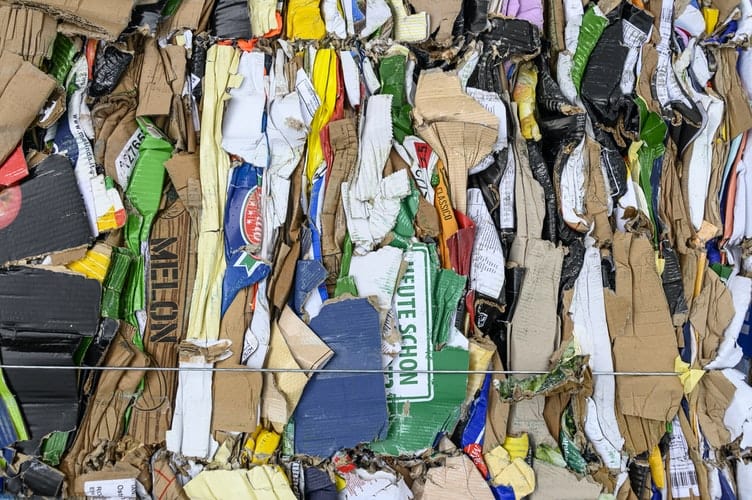
The countries generating the most plastic waste — the United States, the EU member states, Canada — largely export the consequences elsewhere. After China banned plastic waste imports in 2018, the volume redirected to Southeast Asia, where waste management infrastructure is often insufficient. Malaysia banned U.S. plastic waste imports last year, on the grounds that the United States has not ratified the Basel Convention, the treaty that governs the global waste trade. Per Greenpeace and InvestigateWest, plastic that cannot be processed in these receiving countries tends to be burned or dumped near forested areas already under pressure from agricultural and logging industries. A consumption crisis originating in the Global North is being absorbed by the forests of the Global South.
The paper problem
As awareness of plastic's environmental cost has grown, paper packaging has been positioned as the sustainable alternative. But it’s not a simple solution. Its forest footprint is larger than that reputation suggests: The pulp and paper industry accounts for 13–15% of total wood consumption and uses between 33% and 40% of all industrial wood traded globally, according to WWF. Packaging is among the fastest-growing parts of that demand, pushed higher by e-commerce even as office and print paper decline, which keeps pressure on virgin fiber rising rather than easing.
Responsibly managed forestry can be part of the answer. Certified operations that rely on selective harvesting instead of clearcuts, keep buffers along waterways, and replant what they take bring real benefits to forests, rural economies, and the people who depend on them. Much of the industry's heavier footprint traces to operations that skip those safeguards. Even responsibly sourced fiber keeps a standing demand on forests, which is why the material's footprint turns as much on what grows back as on what comes down. Recycled content and lighter packaging reduce how much new fiber the system needs; replanting determines how quickly the forests behind it recover.

Why reforestation is part of this, not separate from it
Planted trees sequester carbon, restore soil microbiomes, filter microplastics from soil and waterways, and rebuild the natural material ecosystems that can reduce community dependence on plastic over time. A 2017 study in the Proceedings of the National Academy of Sciences found that natural climate solutions can deliver more than a third of the cost-effective emissions reductions needed by 2030 to hold warming below 2°C, with forest pathways making up over two-thirds of that potential. That holds whether or not the forest in question was planted yesterday or standing for centuries.
What reforestation cannot do on its own is absorb the consequences of an industry producing well over 400 million metric tons of plastic annually, much of it routed as waste to the same regions where reforestation efforts are concentrated. The two crises developed together and share the same pressure points. Addressing them in separate conversations will keep producing separate and insufficient results.


