Key Takeaways:
- Not all fires burn the same way. When peat ignites, it releases carbon stored not just in trees but in soils that can extend 15 meters underground — making peatland fires among the most carbon-intensive events on record.
- Peat stores carbon when it's saturated. The species planted in Sebangau were chosen specifically to restore the hydrological conditions that keep the soils wet enough to hold the carbon beneath them.
- Indigenous knowledge is key. Identifying which native species bear viable seed, when, and where in an old-growth peat swamp requires generations of ecological familiarity with a specific ecosystem. That knowledge existed in Sebangau's Indigenous communities long before the project began.
- Recovery is measured in decades, not planting seasons. Canopy closure, soil moisture stabilization, and the return of species relationships that allow a forest to regenerate without active intervention are long-horizon outcomes.
In the Peat Swap Forests of Borneo’s Sebangau National Park, Restoration Starts With a Seed
Sebangau National Park's 570,000 hectares of peat swamp forest in Central Kalimantan, Indonesia, store more than 3 gigatons of carbon in organic sediment older than agriculture — the accumulated product of 20,000 years of dead plant material compressing in Borneo's waterlogged lowlands to form peat. Peat is the largest terrestrial carbon store on Earth — storing approximately twice as much carbon as all of the world's forests combined. Sebangau National Park's peatland is the fourth largest in the world.
But in September 2015, it was almost destroyed.
Catastrophic wildfires burned through 83,000 hectares of the park. The smoke persisted for weeks, contaminating the river systems that Indigenous communities depend on for fish and transport, reducing crop yields, and reaching air quality levels that measurably affected human health across a wide stretch of Indonesian Borneo. When the fire reached the peat, it began oxidizing those ancient carbon stores, releasing the planet-warming gases into the atmosphere.

Peat fires are categorically different from surface fires. Peat smolders underground for months — oxygen-starved, nearly impossible to extinguish — releasing carbon stored in centuries of organic accumulation in the soil layers below ground. Indonesia's 2015 fire season was among the most carbon-intensive land-use events in modern climate history, and much of it burned in peat. According to data published in Nature, protected and restored peatlands could sequester up to 9 gigatons of CO2 annually by 2050 — making them one of the most consequential natural climate solutions available.
Sebangau is among the largest intact peat swamp forests remaining in Southeast Asia, a biome that has been substantially reduced across Borneo by legal and illegal commercial logging, drainage for palm oil cultivation, and the increasing recurrence of fire. Among the more than 100 threatened and endangered species that find refuge in what remains, the Bornean orangutan is the most consequential index of what the forest's survival means. The world's largest protected population of this species lives inside Sebangau; its numbers have fallen more than 82% over the last 75 years. Orangutans cannot easily relocate when their forest burns. Their survival is contingent on this particular ecosystem recovering.

How Indigenous Communities Are Restoring Sebangau's Peat Swamp Forest
Since 2022, restoration efforts in Sebangau have employed nearly 300 local Indigenous residents to collect seeds from surviving sections of the forest, raise saplings in community nurseries, and transplant them into degraded terrain. Identifying viable seed sources in an old-growth peat swamp requires generational knowledge — knowing which native species bear seed and when, and which microhabitats to find them in. These restoration efforts supply training, resources, and income. For communities whose fisheries and crop yields were directly damaged by the 2015 fires, that income also represented a form of economic recovery — a direct reconnection to land the fires had rendered unproductive.
“Teaching the technical skills is the easy part. The biggest challenge is changing the way local people think about fire,” Trevor Wilson, then-Executive Director of Working on Fire, said at the time, “because the best fires are the ones that never happen.”
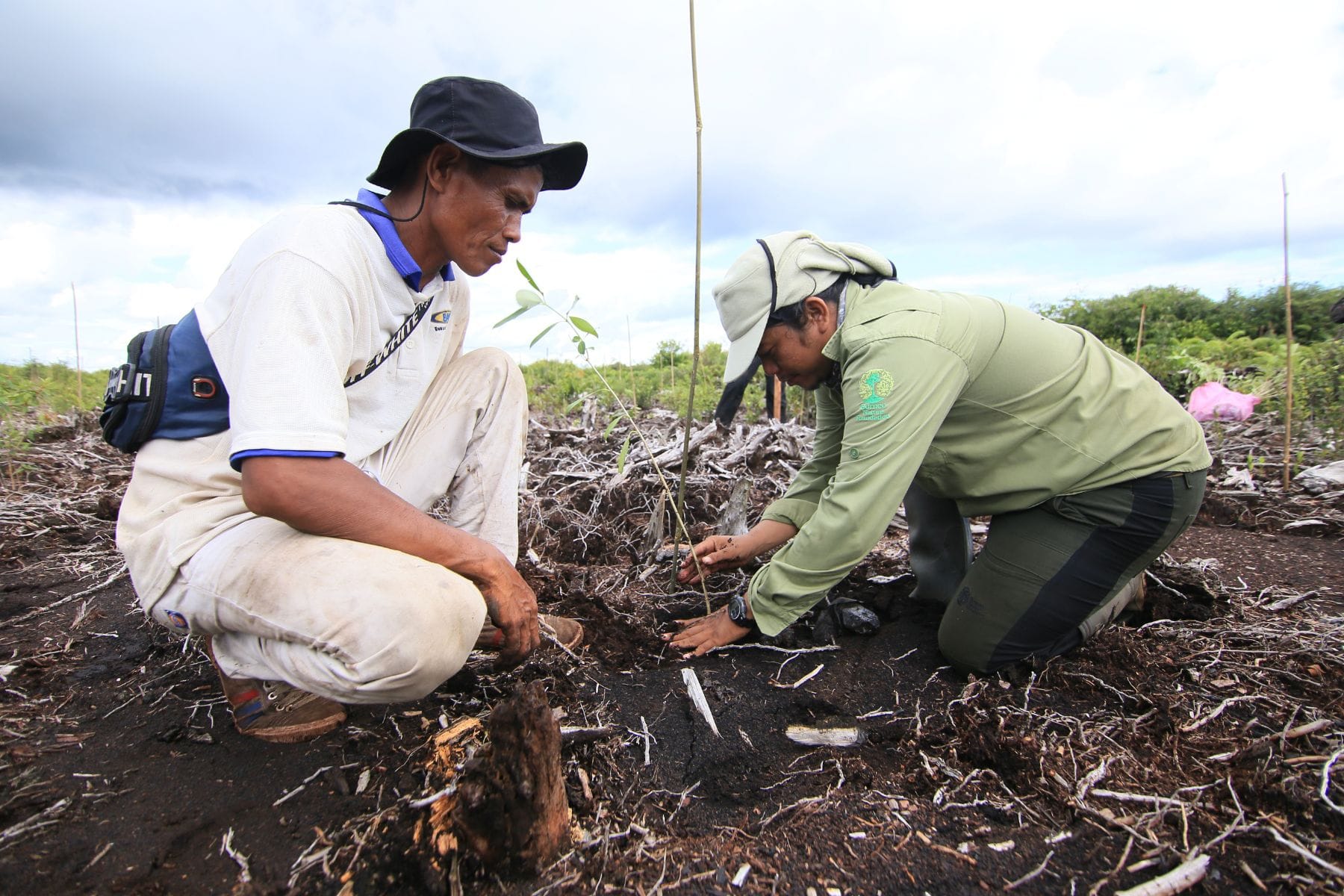
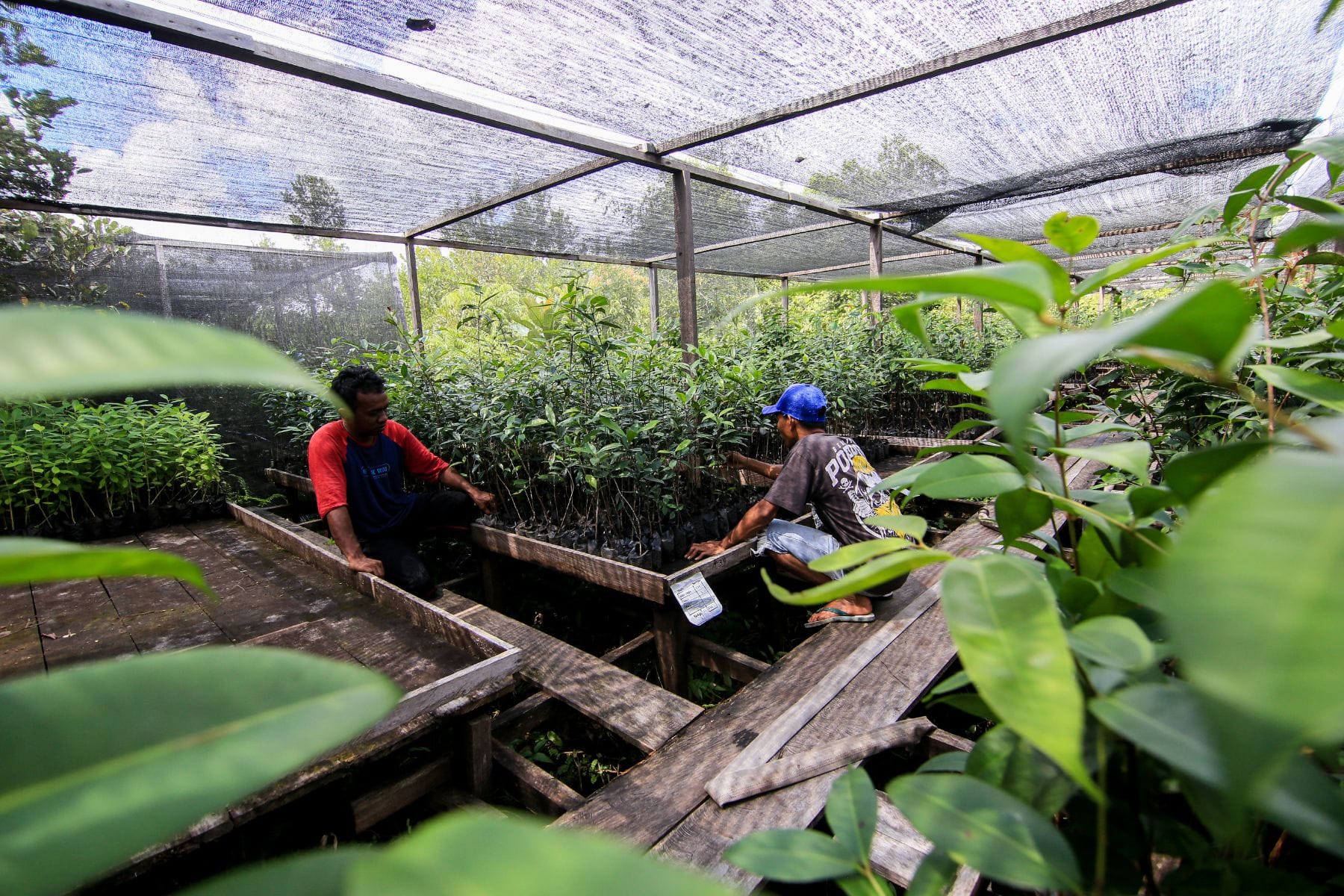
The seven native water- and drought-tolerant species used in the project address the hydrological dimension of peat restoration: maintaining the soil saturation that prevents further burning and stabilizes the carbon in the layers below. Fruit-bearing species rebuild the food web that orangutans, hornbills, and other canopy-dependent wildlife require — and those same animals, as they return, become the primary agents of seed dispersal through the recovering forest, making their presence part of the mechanism of regeneration rather than only an outcome of it.
By the end of 2024, 225,000 trees had been planted across 277.9282.64 hectares of burned ground — a species-diversified system designed to rebuild ecological function as well as canopy cover. This was part of a multi-year restoration program that first saw 150,000 trees across 168 hectares in 2022. The water- and drought-tolerant species planted first address what peat swamps need most immediately: re-saturated soils that slow the decomposition that releases carbon from dried ground, even in the absence of fire. The fruit-bearing species planted alongside them will mature into the productive canopy that draws orangutans, hornbills, and other wildlife back into recovering areas. The community members who collected seeds, ran the nurseries, and planted the first trees into burned ground built the conditions for that to happen.

Recovery from here is measured in decades — canopy closure, soil moisture stabilization, achieved primarily via damming a vast network of canals (historical logging routes) that raise ground water levels to keep peat submerged, and the gradual return of the species interactions that allow a peat swamp forest to sustain and regenerate itself. Each phase depends on the one before it. Get the conditions right, and the forest takes it from there.


