Key Takeaways: Agroforestry and the Future of Sustainable Agriculture
- Agroforestry is a sustainable land-use system that integrates trees and shrubs with crops and livestock on the same ground, improving soil, water, and biodiversity while diversifying what a farm can earn.
- Agroforestry can help create productive and resilient farms while improving soil health, biodiversity, water management and other ecosystem functions.
- The gains are measurable: converting cropland to agroforestry can increase soil organic carbon by as much as 40 percent in the topsoil, and trees already growing on farmland can pull close to 0.75 gigatonnes of carbon dioxide from the air each year worldwide.
- Agroforestry shifts land use from extractive to restorative, and One Tree Planted funds it across the world — easing human-elephant conflict in India, lifting coffee incomes in Rwanda, and protecting the watersheds that feed the Belize Barrier Reef.
Global farmland is under mounting pressure. Up to 40 percent of the world's land is degraded, affecting more than 3 billion people, according to the UN Convention to Combat Desertification (UNCCD). Soil erosion, intensifying heat and drought, and the decline of pollinators all trace back to the same question: how do we keep growing food without exhausting the resources that make food possible? Agroforestry is one of the clearest answers.
What is agroforestry?
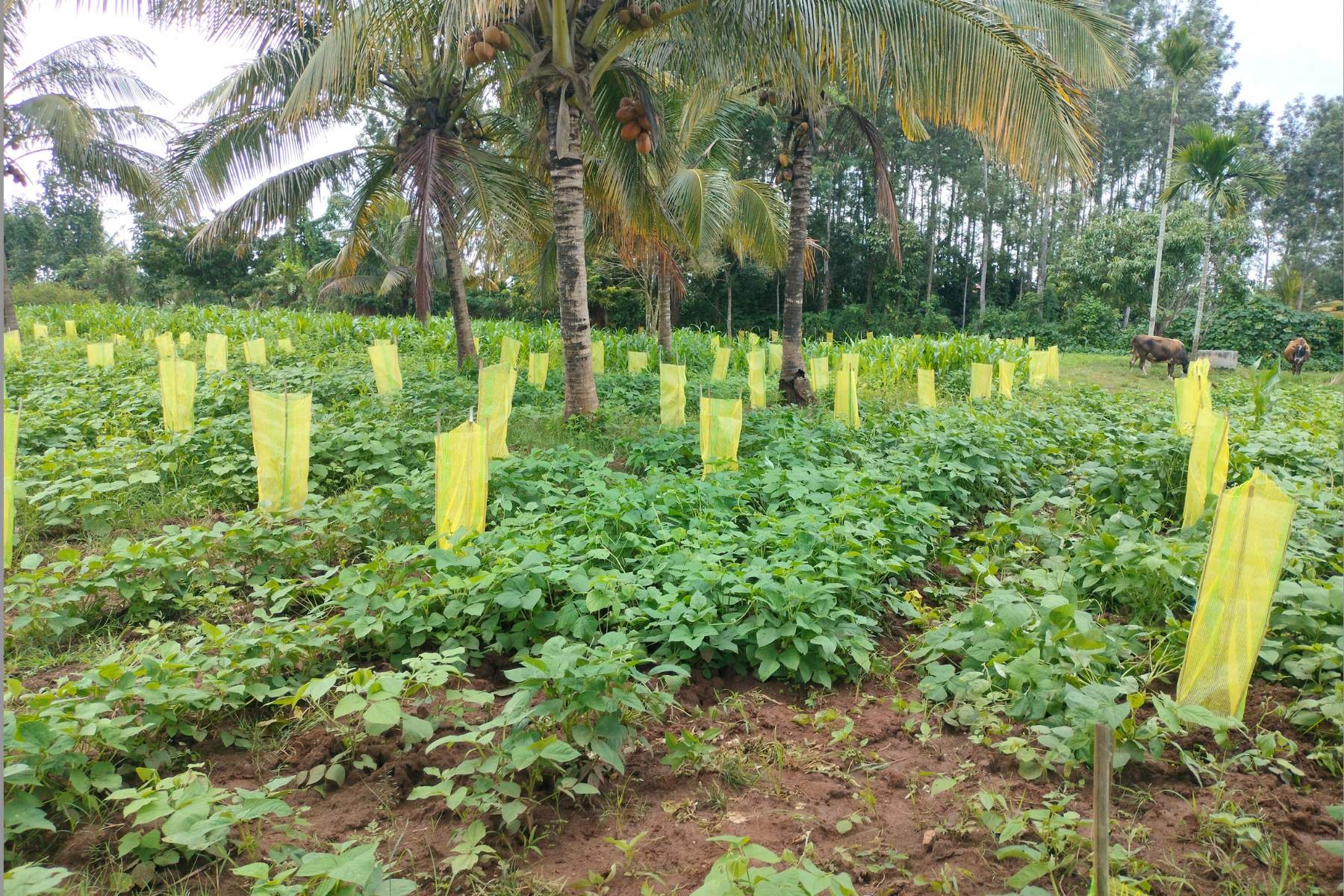
Agroforestry works like this: on a single plot of land, say in the tropics, cocoa can ripen in the shade of banana plants while hardwood timber trees rise above both, their canopies layered much like they would in a forest. That arrangement, the practice of growing crops and trees together on the same land, is one of the oldest ideas in farming that modern industrial farming has lost: trees belong on farms.
The UN Food and Agriculture Organization (FAO) describes agroforestry as a collective term for land-use systems and technologies that integrate woody perennials — trees, shrubs, palms, and bamboos — with agricultural crops or animals on the same parcel of land, in a deliberate spatial or seasonal arrangement.
At the systems level, it is a way of managing land that pairs more sustainable food production with the planting of native tree species, creating lasting economic value for farmers and ecological value for the surrounding landscape. By integrating trees on farms, or by producing crops within forests, farmers can diversify and sustain what they grow, raise their incomes, improve nutrition, and rebuild soil fertility. For a community, it is also a buffer between primary forest and the daily harvesting that would otherwise thin it, a source of steady income, and a way to reduce hunger in rural areas.
What makes agroforestry sustainable?
Agroforestry has the potential to support more sustainable land-use systems when it is appropriately designed, managed, and adapted to local ecological and socioeconomic conditions. But not all tree-based agriculture systems are sustainable. Poorly selected species can compete excessively with crops for water or become invasive and threaten native species.
What makes it sustainable is structural. The trees keep living roots in the ground year-round, holding soil in place, steadying the flow of water, and dropping leaf litter that rebuilds fertility from one season to the next. Nitrogen-fixing species feed the soil in place of synthetic inputs, and a mix of crops and canopy layers spreads a farmer's risk while sharing light, water, and space the way an intact ecosystem would. The land stays productive year after year instead of being spent down.
Regenerative agroforestry sits at the more ambitious end of that spectrum: land managed not only to sustain what remains but to actively rebuild it — restoring soil organic matter, recharging groundwater, and drawing biodiversity back to ground that had lost it.
That ambition is measurable: A review of 229 studies and 25 practitioner sources found that regenerative practices are defined most often by their outcomes — improving soil health, increasing biodiversity, and sequestering carbon — rather than by a fixed checklist of methods. Soil anchors the definition as a goal in more than 85 percent of practitioner sources, because healthy soil is where the other gains begin.
"We cannot feed people if soil is degraded," Rattan Lal, director of Ohio State University's Carbon Management and Sequestration Center and a World Food Prize laureate, told Yale Environment 360. Restoring the world's degraded soils, he has estimated, could draw down 1 billion to 3 billion tons of carbon a year. A shaded coffee farm can be managed sustainably, holding the land steady without reversing past damage, while a regenerative system sets out to leave the soil, water, and wildlife better than it found them — which is what makes agroforestry a practical tool for turning degraded land productive again, rather than only slowing its decline.
What agroforestry does for land, water, and wildlife
The benefits of agroforestry depend on how trees are selected, where they are placed, how they are managed, and how they interact with crops, livestock, soils, water and household livelihoods.
The clearest agroforestry gains show up underground. A global meta-analysis of agroforestry soil studies found that converting cropland to agroforestry raised soil organic carbon stocks by up to 40 percent in the top 30 centimeters of soil — carbon that feeds microbial life, holds moisture, and anchors the ground against erosion. Those same trees are a substantial climate asset. Research mapping tree cover on the world's farmland found that 43 percent of all agricultural land already carries at least 10 percent tree cover, and those trees hold the majority of the more than 45 billion metric tons of carbon stored on the world's farmland.
"Trees on agricultural land sequestered close to 0.75 gigatonnes of carbon dioxide globally per year over the past decade," Henry Neufeldt, then head of climate change research at the World Agroforestry Centre, said when the findings were published. "If we can harness good policies to enhance positive examples and stop negative trends, trees in agricultural landscapes can play a major role in greenhouse gas mitigation."
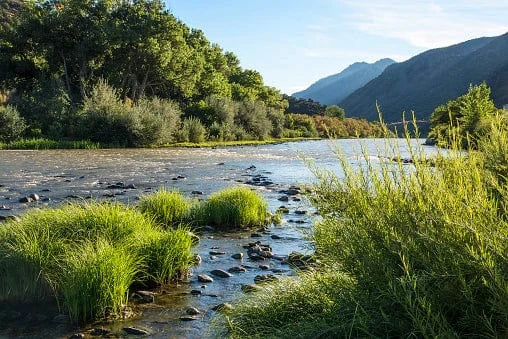
Water and soil move together in these systems. Trees slow and filter what runs across a field, hold banks and slopes in place, and temper the microclimate around crops and livestock, which lowers heat stress and evaporation. Where appropriately designed, agroforestry can improve water infiltration, reduce runoff and erosion, protect riparian areas, and moderate microclimates. However, species selection, tree density and water availability need to be considered carefully, particularly in water-limited environments. Where trees and shrubs are planted along rivers and streams as a riparian buffer, they stabilize banks, filter farm runoff before it reaches the water, shade and slow the current, and steady the moisture balance of the whole area — keeping sediment and nutrients out of downstream ecosystems.
By managing for the native plants, insects, and animals of a place, farmers can lean on natural allies — pollinators to set fruit, predators to keep pests in check — instead of chemical inputs. Biodiversity benefits are strongest where agroforestry systems use ecologically appropriate species and configurations that complement surrounding habitats and provide diverse resources for pollinators, birds, soil organisms, and other wildlife. Livestock delivers similar results when managed with care: trees shade animals from the sun, shield them from wind and rain, and lower the temperature of the ground around them, and while animals have grown less common in modern agroforestry, they can still play a productive role in an integrated system. Forest farming extends the idea into the woods themselves, cultivating fruits, nuts, mushrooms, herbs, and maple syrup under a carefully thinned canopy, so that specialty crops and mature trees grow together and subsistence harvesting no longer degrades the forest.
Industrial agriculture remains a leading driver of global deforestation, clearing land in a way that spends down soil and water faster than either can recover.When appropriately designed and managed, agroforestry can help balance agricultural production with the long-term health of soils, water, biodiversity, and surrounding ecosystems. Managed toward the regenerative end, it can rebuild soil and groundwater, buffer against drought, and return long-term financial value to the people working the land — letting communities live more in step with the places they call home and widening access to the resources everyone there depends on.
None of this happens on its own. "Farmers need access to training, technology, markets, and financial support to adopt agroforestry practices effectively," QU Dongyu, director-general of the FAO, said at an FAO Council side event.